Srubble: The Hand-Drawn Display Font That Feels Human, Not Hollow
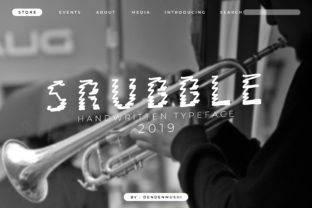
Imagine a font that doesn’t just sit on the page—but leans in, sketches a smile, and makes your headline feel like it was made *for* someone, not just *at* them. That’s Srubble. It’s not another sterile geometric sans or a nostalgic serif revival. Srubble is a modern display font built from deliberate imperfection: uneven baselines, subtle line weight shifts, and the gentle unpredictability of ink meeting paper. It’s hand-drawn in spirit—even if digitally refined—so it carries warmth without sacrificing clarity or contemporary edge.
Where Srubble Fits Like a Well-Worn Jacket
Srubble isn’t meant for body text or spreadsheets. It thrives where personality matters most—where you’re speaking to people, not scanning data. Think of it as the visual equivalent of leaning forward in a conversation: intentional, expressive, and quietly confident.
Branding That Breathes
Small studios, indie makers, and mission-driven brands often struggle to stand out without resorting to loud gimmicks or over-polished sterility. Srubble helps them land somewhere more authentic. A ceramicist launching her first online shop might use Srubble for her logo and “New Collection” banner—it signals craft, care, and human touch before a single product image loads. A neighborhood bike co-op? Srubble on their workshop sign or event poster says, “We fix things—and we do it with heart.” It’s not “cute.” It’s grounded, approachable, and memorable because it refuses to blend in.
Digital Spaces That Don’t Feel Disposable
We scroll past dozens of identical hero sections every day—clean, minimalist, forgettable. Srubble cuts through that noise. Used thoughtfully in a website’s main headline or a newsletter subject line (yes, it works beautifully in email clients when embedded as web-safe fallbacks are handled), it adds tactile texture to otherwise flat interfaces. A wellness coach using Srubble for her “Reset Your Rhythm” course title immediately signals that this isn’t another algorithm-driven program—it’s curated, human-scaled, and intentionally paced.
Print That Invites Touch
There’s still magic in paper. A food truck’s chalkboard-style menu board, a zine cover, or even a limited-run concert poster gains quiet authority with Srubble. Because its rhythm mimics natural handwriting—not rigid calligraphy, but the kind you’d see on a café window or a studio door—it feels earned, not applied. Designers tell us they’ve used it for wedding invitations where couples want elegance *without* formality, or for gallery show announcements where the art itself is raw or process-driven. In each case, Srubble doesn’t compete with the content—it frames it with sincerity.
Who Gets the Most Out of Srubble—and Why
It’s not about who *can* use Srubble. It’s about who *resonates* with what it communicates—and how that alignment creates real impact.
- Creative freelancers (illustrators, lettering artists, UX designers): They appreciate its versatility as a starting point—layering it over textures, animating individual letters, or pairing it with tight, neutral sans-serifs to create dynamic contrast. One motion designer told us she uses Srubble’s irregular spacing as inspiration for kinetic typography timing—letting pauses breathe where the font naturally hesitates.
- Educators and workshop facilitators: When promoting an in-person writing circle or a mindfulness retreat, Srubble subtly signals “this is for humans, not audiences.” It lowers perceived barriers—no jargon, no gatekeeping, just invitation.
- Local businesses with soul: Bookshops, record stores, repair cafes—they’re not selling commodities. They’re curating experiences. Srubble on a window decal or receipt stamp reinforces that curation. It says, “We chose this. We made this. You belong here.”
What to Keep in Mind Before You Use It
Like any strong voice, Srubble works best when matched to intent—not just aesthetics. Here’s what thoughtful users notice:
Scale matters. Srubble shines at larger sizes—24px and up for web, 36pt+ for print. At small sizes, its charm blurs into illegibility. Never force it into captions, footnotes, or navigation menus. Let it lead, not linger.
Contrast is your co-pilot. Pair it with typefaces that ground it: a clean, open sans-serif (think Inter, Poppins, or even modest system fonts like Segoe UI) for supporting text. Avoid other decorative or script fonts nearby—they’ll compete, not complement. Think duet, not choir.
Color choices change its temperature. In deep charcoal or navy, Srubble feels thoughtful and mature. In terracotta or forest green, it leans earthy and artisanal. In soft peach or slate blue, it becomes quietly calming. Test it against your palette—not just on white, but on textured backgrounds or subtle gradients. Its hand-drawn quality means it responds visibly to context.
Licensing is straightforward—but verify. Srubble is available for personal and commercial use, including web embedding and app integration. Always check the current license terms directly from the foundry—especially if you’re using it in client work or SaaS products. Most users find the one-time purchase model refreshingly simple compared to subscription fatigue.
When Srubble Might Not Be the Right Fit
That’s okay—and important to name. Srubble isn’t built for high-stakes legibility under pressure. You wouldn’t use it for airport signage, medical device interfaces, or legal disclaimers. Its personality is its strength—and also its boundary. If your goal is neutrality, universality, or strict regulatory compliance, lean toward tested, highly legible workhorses instead.
It also asks for intention. Slapping Srubble onto a corporate rebrand without considering tone, audience, or supporting design language can feel jarring—not joyful. It rewards reflection. Ask yourself: Does this project benefit from visible humanity? Does the audience respond to warmth over polish? Is there room in the layout for the font to breathe—and be seen?
Real Moments, Not Just Mockups
The most telling feedback we hear isn’t about kerning or x-height—it’s about connection. A teacher shared that after switching her classroom welcome sign from Helvetica to Srubble, students started pointing to the letters and saying, “That looks like *us*.” A nonprofit reworking their donor thank-you cards noticed reply rates increased—not because of the font alone, but because Srubble helped their message land with the humility and gratitude they intended.
That’s the quiet power of Srubble: it doesn’t shout. It gestures. It invites. It remembers that behind every click, signature, or purchase is a person who responds—not to perfection—but to presence.