Palm Insting: The Handwritten Font That Feels Like a Personal Note
Imagine opening a beautifully designed wedding invitation—and instantly feeling warmth, intimacy, and intention. Or scrolling through a boutique’s website and pausing, just for a second, because the headline feels like it was written just for you. That subtle emotional resonance? It often starts with typography. And in today’s design landscape—where authenticity stands out amid algorithmic polish—Palm Insting has quietly become a go-to choice for designers, marketers, and small business owners who want their visuals to breathe with humanity.
What Makes Palm Insting Stand Out Among Handwritten Fonts?
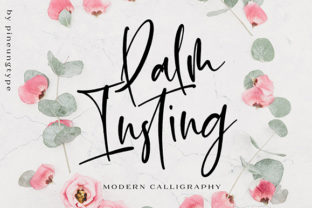
Not all handwritten fonts are created equal. Some lean too playful for luxury branding; others feel overly rigid or digitized, betraying their vector origins. Palm Insting strikes a rare balance: it’s sophisticated, yet casual; refined, yet relaxed. Its letterforms flow with organic variation—subtle shifts in stroke weight, gentle tapering on terminals, and natural-looking entry and exit strokes that mimic real pen-on-paper motion.
Unlike many script fonts that rely on dramatic flourishes or tight spacing to appear “elegant,” Palm Insting achieves elegance through restraint. Its lowercase g and y have soft, open loops. Its uppercase S curves with quiet confidence—not flashy, but unmistakably intentional. Even its punctuation feels considered: periods sit slightly off-center, commas curl with gentle momentum, and quotation marks nestle into words like whispered asides.
Where Palm Insting Shines—Real Projects, Real Impact
Typography isn’t decorative—it’s functional storytelling. And Palm Insting excels where tone matters more than sheer visibility.
- Wedding & Event Branding: From save-the-dates to menu cards, Palm Insting adds sincerity without sacrificing polish. A couple launching a rustic-chic vineyard wedding might pair Palm Insting headlines with a clean sans-serif body font—creating contrast that feels both grounded and elevated.
- Small-Business Identity: Artisanal bakeries, ceramic studios, and independent bookshops use Palm Insting in logos and signage to signal care, craft, and connection. It tells customers, “This wasn’t mass-produced. This was made with attention.”
- Digital Touchpoints: Used thoughtfully in email headers, Instagram story text overlays, or product page subheadings, Palm Insting introduces warmth to otherwise static interfaces. Just one line in Palm Insting—like “Hand-poured, small-batch, made with local honey”—can lift an entire brand voice.
- Editorial & Publishing: Lifestyle magazines and mindful newsletters deploy Palm Insting for pull quotes or section dividers. Its rhythm slows the reader down—not by being hard to read, but by inviting pause.
Practical Considerations Before You Use Palm Insting
Like any expressive font, Palm Insting thrives when used intentionally—not everywhere, and not without context. Here’s what thoughtful users keep in mind:
- Legibility at smaller sizes: Palm Insting is optimized for display use—headlines, titles, short phrases—not body text. At under 24px, some characters (especially connected lowercase letters like “flow” or “script”) may begin to blur visually. For captions or UI labels, pair it with a highly legible companion font instead of shrinking it.
- Language and character support: Most Palm Insting licenses include full Latin character sets—covering English, Spanish, French, German, and more—including accented characters, ligatures, and stylistic alternates. Always verify the specific version you’re licensing, especially if your project targets multilingual audiences.
- Licensing clarity: Palm Insting is typically sold as a desktop + web license bundle—but usage rights vary by vendor. If you’re embedding it in a client’s WordPress site or using it in a mobile app, double-check whether your license permits that. Some foundries offer extended licenses for SaaS platforms or broadcast use—worth confirming early.
- Pairing wisely: Palm Insting sings alongside neutral, well-proportioned sans-serifs (think Inter, Poppins, or Montserrat) and warm, low-contrast serifs (like Literata or PT Serif). Avoid pairing it with other high-contrast scripts or overly geometric fonts—that creates visual competition instead of harmony.
How Designers Are Integrating Palm Insting Into Modern Workflows
Gone are the days of font-hunting across ten different sites. Today’s designers embed Palm Insting directly into Figma libraries, sync it via Adobe Fonts for Creative Cloud projects, or serve it through self-hosted @font-face declarations for custom websites. Its OpenType features—like contextual alternates and discretionary ligatures—activate automatically in supported apps, giving each word a subtly unique rhythm.
For developers building brand-compliant sites, Palm Insting works reliably with modern font-display strategies. Using font-display: swap ensures fallback text appears immediately while Palm Insting loads—so readers never see invisible text or layout shifts. And because its file size remains modest (typically under 120KB for WOFF2), it rarely impacts Core Web Vitals when implemented correctly.
Even non-designers benefit. Canva users now find Palm Insting in curated font libraries—making it accessible for solopreneurs creating social posts or Etsy shop banners. Notepad-style apps and email builders increasingly support custom font uploads, letting marketers add Palm Insting to campaign subject lines or signature blocks—small touches that build recognition over time.
Why Authenticity Is Palm Insting’s Quiet Superpower
In an era of AI-generated imagery and templated layouts, people respond deeply to cues of human presence. A handwritten font like Palm Insting doesn’t just look hand-drawn—it feels hand-drawn. That perception triggers subconscious associations: trust, care, individuality, effort. It signals that someone chose this—not because it was trending, but because it matched the message.
That’s why wellness coaches use Palm Insting in guided journal PDFs. Why sustainable fashion brands set their “About Us” section intro in Palm Insting before switching to a clean body font. Why educators designing printable mindfulness worksheets choose it for affirmations like “You are enough” or “Breathe slowly.” In each case, the font isn’t shouting—it’s leaning in.
Getting Started With Palm Insting—No Design Degree Required
You don’t need to be a typographic expert to use Palm Insting well. Start simple:
- Use it for one focal point per layout: a headline, a call-to-action button, or a short testimonial quote.
- Test contrast: Ensure it meets WCAG AA standards against your background color—especially if used over photos or textured backgrounds.
- Limit variations: Stick to regular weight unless your license includes bold or italic versions—and even then, use them sparingly. Palm Insting’s strength lies in its consistency, not contrast within itself.
- Trust your eye over rules: If a phrase looks “off,” try adjusting letter-spacing (+20–40 units often helps), or switch the word order. Sometimes “Freshly Baked” flows better than “Baked Freshly” in Palm Insting.
And remember—Palm Insting isn’t about perfection. It’s about presence. Its slight irregularities aren’t flaws. They’re invitations: to slow down, to connect, to remember that behind every brand, every product, every message—is a person.
When your goal isn’t just to be seen, but to be felt, Palm Insting becomes more than a font. It becomes a quiet collaborator in meaning-making—one elegant, effortless curve at a time.