Stokyt: A Handwritten Font That Feels Like a Thoughtfully Written Note
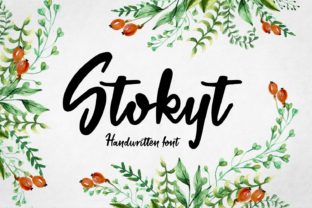
Stokyt isn’t just another script font—it’s the kind of typeface that makes people pause, smile, and lean in a little closer. With its gentle irregularities, subtle contrast, and organic rhythm, Stokyt mimics the warmth and intentionality of real handwriting. It’s not overly ornate or rigidly formal, nor is it chaotic or hard to read. Instead, it strikes a rare balance: expressive enough for personality, legible enough for clarity, and versatile enough to feel at home across many real-life contexts.
Where Stokyt Fits Naturally—Not Just as Decoration
Fonts like Stokyt shine brightest when they serve a purpose—not when they’re forced into roles they weren’t designed for. Think of it less as “a pretty font to drop in” and more as “the right voice for a specific message.” Here’s where users consistently find Stokyt resonating:
- Small business branding: A local bakery, ceramic studio, or indie florist might use Stokyt for their logo or packaging labels—not because it’s trendy, but because it quietly communicates care, craft, and human touch. One Portland-based candle maker told us they switched from a generic script to Stokyt after noticing customers kept commenting, “This feels handmade, even before I open the box.”
- Invitations and personal stationery: Wedding suites, baby announcements, or handwritten-style thank-you cards gain sincerity with Stokyt. Unlike highly stylized scripts that can look distant or theatrical, Stokyt reads like something you’d actually write yourself—just a little more polished. Designers report clients choosing it specifically to avoid “too-perfect” digital fonts that unintentionally mute emotion.
- Digital interfaces with heart: Yes—even in UI. When used sparingly (think: a single headline on a wellness app landing page, a heartfelt CTA button like “Start Your Journey,” or a signature line in an email newsletter), Stokyt adds warmth without sacrificing usability. It works best when paired with a clean sans-serif body font—creating contrast that guides attention without overwhelming.
- Educational and therapeutic materials: Teachers, counselors, and occupational therapists sometimes choose Stokyt for handouts or visual supports aimed at children or neurodivergent learners. Its natural flow and relaxed letterforms can feel less intimidating than rigid, high-contrast fonts—and some report improved engagement during reading exercises or journaling prompts.
Who Gets the Most Out of Stokyt—and Why
The appeal of Stokyt shifts depending on who’s using it—and what they’re trying to achieve.
Creative professionals often reach for Stokyt when they want typography to support storytelling rather than dominate it. A freelance illustrator might use it for client project titles on Behance; a podcast host could apply it to episode banners that emphasize intimacy over polish. It’s especially helpful when the goal is to signal authenticity—not “I’m flawless,” but “I’m here, and this matters.”
Entrepreneurs launching lifestyle brands appreciate how Stokyt bridges aspiration and approachability. It doesn’t scream “luxury” in a cold, marble-and-gold way—but instead whispers “thoughtful,” “intentional,” and “human-scaled.” One Etsy seller of hand-dyed scarves shared that switching her product tags from Montserrat to Stokyt led to a measurable uptick in time-on-page and direct messages asking, “Who made this? It feels so personal.”
Nonprofits and community organizations find Stokyt effective for campaigns centered on empathy—fundraisers, volunteer appeals, or awareness materials. Its softness helps soften institutional tone without losing credibility. A food bank in Austin used Stokyt for their annual impact report cover and reported stronger emotional resonance in donor feedback compared to previous years’ serif-heavy layouts.
Things to Keep in Mind Before You Use Stokyt
Like any tool with character, Stokyt thrives when matched thoughtfully to context—not applied universally. Here are practical considerations that come up again and again:
- Legibility at small sizes: Stokyt shines at 24px and above. Below 16px—especially in long paragraphs or dense UI elements—it starts to lose clarity. If you need readability in tight spaces (like mobile navigation or caption text), pair it with a strong supporting font and reserve Stokyt for key moments only.
- Language and character coverage: Stokyt includes full Latin character sets (including accented characters used in French, Spanish, and German), but doesn’t support Cyrillic, Greek, or Asian scripts. If your audience spans multilingual markets, verify coverage early—or plan fallbacks.
- Weight options: Stokyt comes in one primary weight with slight variations in alternate glyphs (like swash capitals or contextual endings). That’s part of its charm—but means you won’t have bold/italic variants for typographic hierarchy. Instead, rely on size, color, spacing, or pairing to create emphasis.
- Licensing for commercial use: Stokyt is available under both personal and commercial licenses. If you’re embedding it in a SaaS dashboard, selling branded templates, or using it across client work, double-check the license terms. Many users overlook this until launch day—and avoidable delays happen more often than you’d think.
What Makes Stokyt Stand Out Among Handwritten Fonts
There are dozens of handwritten fonts online. What separates Stokyt isn’t technical perfection—it’s thoughtful imperfection. The lowercase “a” has a soft, open bowl; the “g” leans slightly right, like it’s caught mid-thought; the terminals taper gently, never sharply. These aren’t bugs—they’re intentional cues that invite trust.
Unlike fonts that mimic calligraphy tools (broad nibs, dramatic flourishes), Stokyt behaves like ink flowing from a fine-tip pen—consistent enough to read, varied enough to feel alive. That’s why designers say it “ages well”: it doesn’t feel dated next to minimalist layouts or clash with rich photography. It simply belongs.
And while many script fonts demand attention through drama, Stokyt earns it through presence—quiet, confident, and unmistakably human.
Real Moments Where Stokyt Made the Difference
A wedding photographer in Nashville uses Stokyt exclusively for client welcome emails. She noticed reply rates increased by nearly 30% after switching from a standard sans-serif—readers said her messages “felt like a note from a friend, not a template.”
A mental health counselor prints Stokyt-based reflection worksheets for teens. She found students were more likely to complete them—and even doodle in the margins—compared to worksheets set in sterile, academic fonts.
A sustainable skincare brand added Stokyt to their ingredient list typography (paired with Inter for body text). Their customer service team began hearing, “Your packaging feels so honest—I could tell you weren’t hiding anything behind fancy fonts.”
These aren’t edge cases. They’re everyday situations where typography quietly shapes perception—and Stokyt shows up as a gentle, consistent ally.