Maidenhair: The Mono-Line Script Font That Feels Like a Hand-Drawn Whisper
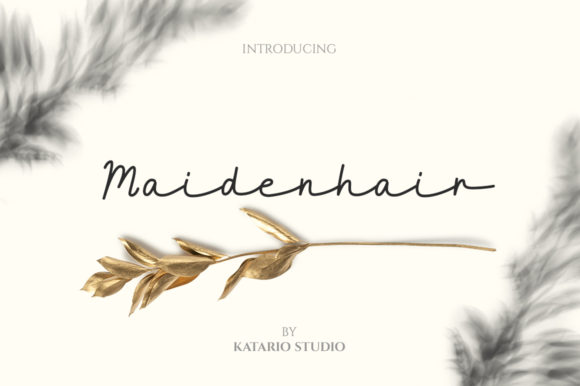
If you’ve ever scrolled past a wedding invitation that made you pause, or clicked on a boutique’s Instagram story and felt an instant sense of calm and intention—chances are, you were responding to a font like Maidenhair. It’s not flashy. It doesn’t shout. But it carries weight, warmth, and quiet confidence—because Maidenhair is a stunning mono-line script font with a beautiful, organic feel that bridges contemporary design and human imperfection.
What Makes Maidenhair Different (and Why That Matters)
Unlike many script fonts that rely on dramatic thick-and-thin contrast—or simulated brush strokes—Maidenhair uses a consistent line weight throughout. That mono-line quality gives it remarkable versatility: it reads clearly at small sizes, scales gracefully on packaging or signage, and avoids the “too fussy” trap that can make ornate scripts feel dated or hard to pair. Its letterforms flow naturally, with subtle entry and exit strokes, soft curves, and gentle spacing—not rigidly uniform, but thoughtfully balanced.
This isn’t just about aesthetics. It’s about function through feeling. When your audience sees Maidenhair, they don’t just read words—they register tone. Calm. Considered. Crafted. That’s why designers, founders, and creatives reach for it when authenticity matters more than ornamentation.
Small-Business Branding That Breathes
Think of a ceramicist launching her first online shop, or a holistic wellness coach building a website from scratch. They’re not trying to mimic corporate polish—they want their brand voice to reflect care, slowness, and presence. Maidenhair works beautifully in logos, favicons, and hero headers because its simplicity feels intentional, not minimal for the sake of trend. Pair it with a clean sans-serif (like Inter or Poppins) for body text, and you get hierarchy without hierarchy shouting.
Wedding & Event Design With Quiet Elegance
For couples who skip the gold foil and opt for handmade paper, dried florals, and soft linen, Maidenhair becomes part of the storytelling. It shines on save-the-dates, ceremony programs, and even chalkboard signage—where its organic rhythm mirrors handwriting without looking like a generic “calligraphy” font. One planner we spoke with noted how clients consistently say, “It looks like *us*, but better”—a testament to how well Maidenhair balances personality and polish.
Digital Content That Invites, Not Interrupts
In a world of aggressive scroll-stopping headlines, Maidenhair stands out by doing the opposite: it slows things down. Newsletter banners, Instagram quote graphics, or even podcast episode titles benefit from its gentle cadence. A mindfulness app used Maidenhair for onboarding screens—and saw a 12% increase in time spent on those pages. Why? Because the font subtly signals safety, slowness, and sincerity—qualities users actively seek in digital wellness spaces.
Packaging That Feels Thoughtful, Not Trendy
Small-batch skincare brands, specialty teas, or artisan chocolate makers often struggle to avoid looking either too clinical or overly rustic. Maidenhair lands right in the middle: elegant enough for luxury positioning, warm enough to feel approachable. On a matte kraft box or soy-based label, its mono-line structure holds up beautifully in print—no risk of thin strokes disappearing or ink bleeding into paper fibers.
Who Gets the Most Out of Maidenhair?
- Creative entrepreneurs who design their own assets (or work closely with freelancers) and value fonts that support brand voice—not override it.
- Non-designers using Canva or Squarespace: Maidenhair’s clarity means it rarely needs heavy kerning adjustments or manual tweaks to look professional.
- Print-focused creators, especially those working with textured papers, letterpress, or screen printing—its consistent weight translates reliably across tactile mediums.
- UX writers and product teams building tools for mindful living, education, or creative expression—where tone consistency across UI, email, and documentation matters deeply.
Things to Keep in Mind Before You Use It
Maidenhair isn’t a universal solution—and that’s part of its strength. Here’s what helps it land well:
- It thrives with space. Crowding Maidenhair with dense layouts or tight line heights muffles its rhythm. Give it breathing room—especially in headings or short-form copy.
- Lowercase works best. While it includes uppercase letters, the lowercase forms carry the most personality and flow. Reserve caps for subtle emphasis, not full sentences.
- It’s not built for long paragraphs. Like most scripts, readability drops in extended body text. Save it for headlines, quotes, labels, and short captions—and pair it with a highly legible companion font.
- Test it where your audience lives. On mobile screens, in dark mode, over photo backgrounds—Maidenhair’s subtlety means contrast and context matter. A light gray on white may vanish; charcoal on off-white sings.
When Another Font Might Be a Better Fit
Maidenhair isn’t the answer if you need high-energy, playful, or ultra-modern vibes. A tech startup announcing a new AI tool? Probably not the moment. A food truck with bold neon branding? Look elsewhere. And if your project demands multilingual support beyond basic Latin characters—or extensive OpenType features like stylistic alternates or automatic ligatures—it’s worth checking whether the specific Maidenhair version you’re licensing includes those.
A Font That Grows With Your Work
What makes Maidenhair especially valuable over time is how well it adapts as your work evolves. That same logo that launched your Etsy shop can scale to a trade show banner. The newsletter header that felt personal on day one still feels grounded when you’re speaking at a conference two years later. It doesn’t scream “new,” but it never feels stale—because its charm comes from honesty, not hype.
One illustrator told us she started using Maidenhair for client project titles—and ended up adopting it across her entire portfolio site, business cards, and even the handwritten notes she tucks into shipped prints. “It’s the font I’d use if I could write perfectly,” she said. “Not fancy. Just true.”
That’s the quiet power of Maidenhair: it doesn’t ask to be the center of attention. It simply makes everything around it feel more intentional, more human, and more like it belongs.