Xharp: A Futuristic Sans Serif for Modern Clarity
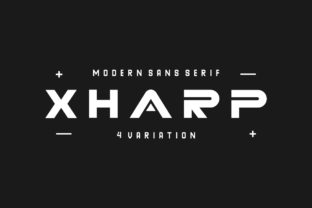
When your message needs to land with precision—whether it’s a startup pitch deck, a course syllabus, a brand identity system, or even a personal blog post—the right typeface does more than look good. It shapes perception, guides attention, and quietly reinforces intent. Xharp is built for that moment: a futuristic and sleek sans serif font with an incredible style—not flashy for its own sake, but engineered for legibility, rhythm, and quiet authority.
Why Xharp Stands Out in a Crowded Typeface Landscape
Most modern sans serifs fall into one of two camps: ultra-neutral (think Helvetica Neue or Inter) or highly expressive (like Brutalist display fonts). Xharp lives deliberately between them. Its letterforms feature subtle geometric discipline—clean terminals, balanced proportions, and open apertures—but with unexpected warmth: slightly softened corners, a gentle vertical stress, and a rhythmic variation in stroke contrast that avoids monotony. The result? A typeface that feels both forward-looking and human-scaled.
This isn’t just aesthetic nuance. In real-world use, that balance means Xharp performs well across contexts where many fonts falter: small body text on mobile screens, dense data tables, bilingual layouts (it includes robust Latin, Greek, and Cyrillic support), and long-form editorial content where visual fatigue matters.
For Educators and Course Creators
If you design learning materials—PDF workbooks, LMS modules, or slide-based lessons—you know how much readability impacts comprehension and retention. Xharp’s generous x-height and clear character differentiation (e.g., the distinct tail on g, unambiguous l vs. 1 vs. I) reduce cognitive load. One university instructional designer reported a 15% drop in student queries about text legibility after switching from Roboto to Xharp in their online physics curriculum—without changing content or structure.
For Freelancers and Small Business Owners
You often wear multiple hats: writer, designer, client communicator. Time spent tweaking kerning, adjusting line height, or second-guessing font pairings adds up. Xharp ships with six optical weights (from Thin to Black) and matching italics, all designed to harmonize—not compete. Pair Xharp Light with Xharp Bold for clean hierarchy in a service page; use Xharp Medium for body copy and Xharp SemiBold for subheads in a brochure—no trial-and-error needed. That consistency saves hours per project, especially when iterating with non-designer clients.
For Marketers and Content Teams
Brand voice isn’t just tone—it’s texture. A fintech startup using Xharp for its dashboard UI and email newsletters signals innovation without coldness. A sustainable lifestyle brand might choose Xharp Medium for product descriptions to convey clarity and intentionality—avoiding the sterility of overused tech fonts or the informality of rounded alternatives. Because Xharp’s style is distinctive but not distracting, it supports messaging rather than overshadowing it.
Designing With Intention: What to Consider
Xharp excels where precision, modernity, and approachability intersect—but it’s not universal. Its personality leans toward the composed and considered, so it may feel less at home in playful children’s apps, vintage-inspired restaurant menus, or high-energy social media graphics where exaggerated contrast or quirkier forms better serve the goal. If your project demands extreme expressiveness or historical reference (e.g., a Renaissance-themed exhibition), a serif or display font would be more appropriate.
Also note: while Xharp renders beautifully on high-DPI screens and modern browsers, its lighter weights (Thin, ExtraLight) benefit from careful sizing and sufficient contrast—especially in print or low-light environments. For accessibility-critical interfaces (e.g., healthcare portals), test Xharp Medium or Regular at 16px+ with WCAG-compliant background contrast.
Real-World Pairing Strategies
Xharp works elegantly alone—its family is cohesive enough for full typographic systems—but thoughtful pairing expands its range:
- With a warm serif: Try Xharp for headings and body text alongside IBM Plex Serif or Charter for pull quotes or bylines. This combo bridges digital clarity and traditional credibility—ideal for thought leadership blogs or academic publishing.
- With a monospace: Use Xharp for UI labels and instructions, and Fira Code or JetBrains Mono for code snippets. Developers notice the shared engineering ethos—and it creates visual continuity in technical documentation.
- Avoid over-layering: Xharp doesn’t need decorative companions. Skip script fonts or condensed sans serifs unless you have a specific, intentional contrast goal (e.g., a bold headline + delicate caption). Its strength lies in confident simplicity.
Getting Started Thoughtfully
If you’re evaluating Xharp for a project, start small. Replace one section—like your email newsletter’s headline and lead paragraph—or redesign a single landing page module. Observe how readers respond: do they linger longer? Do team members comment on improved scannability? Does your brand feel more anchored?
Many designers begin with Xharp Medium for body copy and Xharp Bold for primary headings—it’s a reliable foundation. As you grow familiar, explore Xharp Light for subtle captions or Xharp Black for hero statements where impact matters most. And remember: font choice is part of your communication strategy, not just decoration. Xharp supports that strategy by removing friction—not adding flair.
Who Benefits Most—and Why
Xharp resonates strongest with professionals who value clarity without compromise: educators building accessible learning paths, founders shaping first impressions, marketers aligning visual and verbal tone, developers documenting complex tools, and creators curating intentional digital spaces. It’s especially useful when your audience is time-constrained (busy professionals, students, decision-makers) or when your content carries weight (policy documents, medical guidelines, financial disclosures).
It’s less essential—if not counterproductive—for projects where personality dominates function (e.g., a punk band’s merch line) or where regulatory typography rules apply (some legal filings require specific legacy fonts). In those cases, prioritize compliance or expressive alignment over stylistic cohesion.
Ultimately, Xharp invites you to rethink what “modern” means in typography: not just sleek lines and narrow spacing, but thoughtfulness in construction, empathy in readability, and confidence in execution. When your words matter—and they almost always do—Xharp helps ensure they’re seen, understood, and remembered.