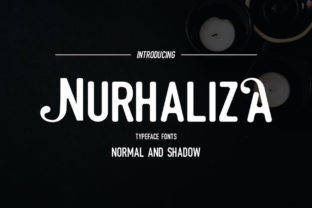
Nurhaliza: Bold Sans Serif with Character
If you’ve ever stared at a layout feeling like it’s technically sound—but somehow forgettable—Nurhaliza might be the quiet shift your work needs. It’s not just another bold sans serif. It’s a typeface built with intention: clean lines, confident weight, and subtle, unexpected details that give it presence without shouting. Think of it as the kind of font that holds space—not by overwhelming, but by earning attention through clarity and quiet confidence.
What Makes Nurhaliza Stand Out
Nurhaliza is designed to be both functional and expressive. Its letterforms are geometrically grounded, yet softened with carefully considered curves and open counters—making it highly legible even at smaller sizes or on screen. The “bold twist” isn’t about exaggerated contrast or decorative flair; it’s in the rhythm of its strokes, the balance between tension and ease, and how each character sits comfortably beside the next.
Unlike many ultra-bold fonts that sacrifice readability for impact, Nurhaliza maintains strong x-height, generous spacing, and consistent stroke modulation. That means it works where others falter: in UI buttons, editorial pull quotes, podcast episode titles, or small-format packaging. It’s versatile—not because it tries to be everything, but because its design choices serve real use cases.
Creative Applications You Can Start With Today
You don’t need a redesign project to test Nurhaliza. Try it in low-stakes, high-impact places first:
- Blog headers and featured quotes — Pair it with a neutral text face (like Inter or Lato) to create hierarchy that feels intentional, not forced.
- Social media graphics — Use it for short, action-oriented text: “Join the Workshop,” “Limited Spots,” “New Guide Live.” Its boldness reads clearly even when cropped or scaled down in feeds.
- Printed workshop handouts or course worksheets — Its open forms and sturdy proportions hold up well in black-and-white laser printing, and its visual weight helps learners quickly identify section headers or key takeaways.
- Logo lockups for service-based brands — Especially for educators, consultants, or creative studios who want modern credibility without cold minimalism. Try setting “Nurhaliza” in all caps with tight tracking for a compact, memorable mark.
Adapting Nurhaliza Across Audiences and Platforms
How you use Nurhaliza depends less on rules and more on context—and who’s receiving the message.
For educators and course creators: Use Nurhaliza for slide titles and module labels, then switch to a softer sans serif for body copy. This creates clear visual pacing—students know when to pause and absorb, and when to read actively. Avoid overusing it in long paragraphs; its strength lies in framing, not filling.
For small business owners and local makers: Apply it selectively on product tags, storefront signage, or email subject lines. A coffee roaster might set “Single-Origin Ethiopian” in Nurhaliza above a brief tasting note in a lighter weight—giving the origin story weight without cluttering the label. Consistency matters more than frequency: using it the same way across your website, packaging, and Instagram highlights builds recognition faster than sprinkling it everywhere.
For freelancers and designers: Nurhaliza can become part of your visual signature—especially if your clients value clarity and craft over trendiness. Include it in your presentation decks as a headline font, and keep your portfolio site’s navigation or project titles in it. Just make sure your fallback stack (e.g., "Nurhaliza", -apple-system, BlinkMacSystemFont, "Segoe UI", sans-serif) ensures graceful degradation if it’s not loaded.
Keeping Your Work Clear and Audience-Friendly
Bold fonts invite bold decisions—but clarity should always lead. Here’s how to stay grounded:
- Respect hierarchy. Nurhaliza shines as a headline or callout font—not as body text. If you’re designing a newsletter, use it only for the subject line and section dividers. Let your body font carry the conversation.
- Test contrast early. On light backgrounds, pair it with dark charcoal (#333333), not pure black (#000000), for better readability and reduced eye strain. On dark backgrounds, use a crisp off-white (#f8f8f8) rather than full white.
- Watch line length and spacing. At larger sizes, increase letter-spacing slightly (0.5–1px) to prevent visual crowding. For web use, set line-height between 1.3 and 1.45 when using it for headings—tight enough to feel cohesive, loose enough to breathe.
- Stay consistent with weight usage. Nurhaliza is typically used in its Bold or ExtraBold weights. Avoid mixing it with other bold sans serifs in the same layout—its voice is distinct enough to stand alone.
Ideas That Go Beyond the Obvious
Try these less-common but effective approaches:
- Monochrome branding systems. Use Nurhaliza across all touchpoints—website, invoice templates, thank-you cards—in one color (e.g., deep navy or forest green). The consistency reinforces professionalism without needing complex visuals.
- Animated text reveals. In video intros or micro-interactions, animate Nurhaliza characters appearing one-by-one. Its strong shapes and even stroke weight make it ideal for clean, readable motion graphics.
- Hand-lettered hybrid layouts. Combine Nurhaliza headlines with scanned ink sketches or custom-drawn icons. Its structure provides stability, while organic elements add warmth—ideal for independent publishers or artisan brands.
- Accessibility-first posters. Design event flyers where Nurhaliza sets the date, time, and venue in large, high-contrast text—and all other info follows WCAG AA guidelines for size, spacing, and color contrast. Its legibility makes it a practical ally for inclusive communication.
Nurhaliza doesn’t ask you to reinvent your process. It asks you to reconsider where emphasis belongs—and whether your current tools help you place it with purpose. You don’t need a big launch or a full rebrand to begin. Pick one recurring element—a newsletter header, a series of Instagram story templates, your resume’s name line—and apply Nurhaliza there. Notice how it changes the tone. Notice what feels easier, sharper, or more aligned with how you want to be perceived.
That’s where real creative momentum starts: not with grand gestures, but with precise, thoughtful choices—repeated with care.