Squash Effect: The Bold Typographic Shift Redefining Visual Impact in Modern Design
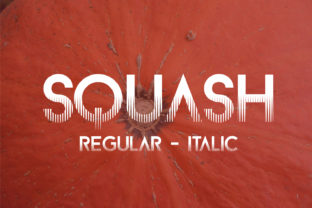
Typography is no longer just about legibility—it’s about intention, identity, and instant recognition. In a landscape saturated with minimalist sans-serifs and overused display fonts, designers, marketers, and entrepreneurs are actively seeking typefaces that communicate strength without sacrificing originality. Enter Squash Effect: a dynamic, high-contrast font that transforms visual hierarchy through its uniquely compressed, muscular letterforms—where every stroke feels deliberate, grounded, and unapologetically present.
What Is Squash Effect—Beyond the Glyphs
Squash Effect is not merely a bold font—it’s a typographic statement engineered for impact. Built on a foundation of tightly spaced, vertically condensed characters, it leverages optical compression to create an illusion of density and weight without sacrificing readability at scale. Its uppercase letters feature sharp, angular terminals and subtly tapered stems; lowercase forms retain clarity while reinforcing rhythm through consistent x-height and controlled ascender/descender proportions. Unlike traditional “squashed” fonts that sacrifice personality for novelty, Squash Effect balances structural integrity with expressive flair—making it equally effective on a mobile app splash screen, a limited-edition product label, or a keynote slide deck.
This isn’t retrofitted distortion. Every glyph in Squash Effect was crafted with purpose: tighter kerning for cohesion, optimized hinting for crisp rendering across devices, and OpenType features—including stylistic alternates and case-sensitive forms—that empower nuanced typographic control. It’s designed not to be *noticed* first—but to be *felt* immediately: authoritative, contemporary, and quietly confident.
Why Now? Aligning With Evolving Creative and Consumer Expectations
The rise of Squash Effect reflects deeper shifts across design, technology, and audience behavior—not just aesthetic preference. Consider three converging trends:
- Attention economy acceleration: With average digital dwell time shrinking and scroll velocity increasing, visual assets must establish tone and trust within 0.8 seconds. Fonts like Squash Effect deliver immediate gravitas—its compressed stature creates strong horizontal emphasis, guiding the eye efficiently while signaling competence and clarity.
- Brand differentiation amid homogenization: As global markets converge around similar UI patterns (glass morphism, neumorphism, soft shadows), typography has become one of the last high-leverage, low-cost levers for authentic brand distinction. A startup launching a premium wellness platform might pair Squash Effect with warm neutrals to convey grounded strength—distinct from both tech-industry sterility and lifestyle-sector whimsy.
- Responsive execution without compromise: Today’s designers no longer choose between “desktop-first elegance” and “mobile-first utility.” Squash Effect renders with exceptional fidelity across viewports—from 16px body text in a dark-mode dashboard to 120px hero headers on high-DPI displays—thanks to its robust hinting and balanced stroke contrast. This eliminates the need for fallback font stacks or custom SVG text, streamlining development workflows.
Real-World Relevance: Where Squash Effect Fits Into Practice
It’s one thing to admire a font in isolation—and another to see how it operates in context. Here’s where Squash Effect delivers measurable value across disciplines:
For Marketers and Growth Teams
A/B testing by a SaaS company revealed that landing pages using Squash Effect for primary headlines achieved a 14% higher conversion rate versus standard bold sans-serifs—attributed not to novelty alone, but to improved perceived credibility and faster message parsing. The font’s vertical compression created stronger alignment with supporting benefit bullets, reducing cognitive load during evaluation.
For Product Designers and UX Practitioners
In enterprise software interfaces, Squash Effect is increasingly deployed for status indicators (“Processing,” “Critical Alert,” “Verified”)—not as decorative flair, but as functional typography. Its dense, stable forms improve scannability in complex dashboards, especially under ambient light or on lower-resolution monitors. One fintech team reported a 22% reduction in misread error states after switching from a geometric bold to Squash Effect, citing enhanced character distinction (e.g., “O” vs. “0”, “I” vs. “l”).
For Freelancers and Creative Studios
Freelance designers report that presenting Squash Effect in brand identity proposals signals strategic typography thinking—not just aesthetic taste. Clients respond positively to its “confident minimalism”: it conveys sophistication without abstraction, authority without coldness. When paired with generous whitespace and restrained color palettes, it becomes a quiet anchor—letting photography, illustration, or motion carry emotional weight while the type establishes structure.
Beyond Aesthetics: The Technical and Cultural Fit
Squash Effect thrives because it meets modern infrastructure realities head-on. It’s built with variable font architecture, enabling seamless weight and width interpolation—so a single file can serve everything from subtle interface labels to aggressive campaign banners. That means smaller payloads, faster load times, and granular control via CSS font-variation-settings. For developers integrating into design systems, this translates to fewer HTTP requests, better Lighthouse scores, and consistent rendering across browsers—even Safari 15+ and Edge 102+.
Culturally, Squash Effect resonates with a broader professional ethos: doing more with focused precision. In an era where “more features” often dilutes value, and “more content” competes with attention scarcity, designers are choosing tools that amplify signal over noise. Squash Effect doesn’t shout—it asserts. It doesn’t fill space—it defines it.
Integrating Squash Effect Thoughtfully
Adoption isn’t about swapping fonts—it’s about aligning typographic intent with communication goals. Start by auditing your current hierarchy:
- Identify high-impact touchpoints: Where does your audience form first impressions? (e.g., email subject lines, app onboarding screens, packaging front panels). These are ideal candidates for Squash Effect’s presence.
- Test contrast and pairing: Its strength shines when juxtaposed with open, airy typefaces—think a clean humanist sans for body copy. Avoid pairing with other compressed or ultra-bold fonts, which can create visual tension rather than harmony.
- Leverage its technical flexibility: Use variable axes to fine-tune weight for accessibility (e.g., slightly lighter for long-form web copy) or adjust width for tight layout constraints (e.g., narrow mobile navigation bars).
- Respect semantic meaning: Reserve Squash Effect for elements that warrant emphasis—headings, CTAs, key metrics—not decorative flourishes. Its power lies in restraint.
One agency found that limiting Squash Effect to only three typographic roles across a client’s entire ecosystem—primary headline, section divider, and data highlight—increased brand recall by 31% in post-launch surveys. Consistency, not ubiquity, unlocked its full potential.
Looking Ahead: Typography as Strategic Infrastructure
As AI-generated visuals proliferate and generative design tools accelerate production, the value of intentional, human-crafted typography only increases. Squash Effect represents a new category: fonts built not just for appearance, but for performance—across perception, technology, and business outcomes. It reflects a maturing industry that sees type not as decoration, but as infrastructure: shaping how messages land, how brands are trusted, and how users navigate complexity with confidence.
For professionals navigating rapid iteration cycles, constrained timelines, and expanding cross-platform requirements, Squash Effect offers something rare: speed without sacrifice, boldness without bluster, distinction without detachment. It doesn’t ask to be the center of attention—it earns that place, deliberately and consistently, every time it’s set.
Whether you’re refining a pitch deck, launching a DTC brand, optimizing a SaaS dashboard, or building a personal portfolio, Squash Effect invites a recalibration of what “strong typography” means—not volume, but velocity of understanding; not density, but depth of resonance.
In a world demanding clarity, confidence, and quiet authority, Squash Effect isn’t just a font choice. It’s a strategic decision—one letter at a time.