Shintania: A Romantic Script Font That Balances Expressiveness and Legibility
Shintania stands out in the crowded landscape of script fonts—not through novelty alone, but through deliberate craftsmanship. It’s a hand-drawn-style typeface designed with rhythm, contrast, and subtle organic variation in mind. Unlike many decorative scripts that sacrifice readability for flair, Shintania maintains a consistent baseline, thoughtful letter-spacing, and carefully calibrated stroke modulation. That balance makes it more than just an aesthetic choice; it becomes a functional tool for designers who need personality without compromising clarity.
What Sets Shintania Apart Visually
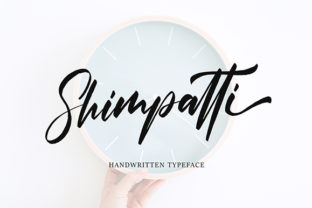
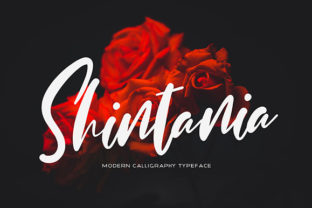
At first glance, Shintania evokes calligraphic warmth—soft entry and exit strokes, gentle swashes on select characters (like y, g, and f), and a slight forward lean that suggests motion and intimacy. Its lowercase forms feature open counters and relaxed terminals, contributing to airflow and visual breathing room. Uppercase letters are purposefully distinct: not overly ornate, but confident and grounded, avoiding the “overly scripted” look that can feel dated or hard to pair.
The font includes standard Latin characters, numerals, punctuation, and basic diacritics—enough for English-language projects and many Western European applications. It doesn’t include extended language support (e.g., Cyrillic or Vietnamese), nor does it offer stylistic alternates or variable weight axes. That’s not a flaw—it’s a design decision aligned with its intended use: expressive yet focused typography for short-form, high-impact applications.
Where Shintania Performs Best
Shintania excels where tone matters as much as information. Wedding invitations, boutique packaging, artisanal product labels, editorial pull quotes, and boutique brand logos benefit most from its romantic, unhurried presence. For example, a small-batch candle company might use Shintania for its product name on a matte kraft label—its soft curves reinforcing notions of care and craft without shouting for attention.
In digital contexts, it works well at larger sizes: hero section headlines, Instagram story text overlays, or email newsletter banners. At 24px and above, its character shapes remain legible even against textured or muted backgrounds. However, it’s not suited for body copy, interface labels, or dense UI elements—its design intentionally prioritizes mood over utility in those spaces.
Practical Integration and Workflow Considerations
Shintania is distributed as a standard OTF/TTF file, compatible with Adobe Creative Cloud apps, Affinity Suite, Figma (via font linking), and common desktop publishing tools. Installation is straightforward, and no special plugins or licenses are required for standard use. For web projects, it can be self-hosted via @font-face, though performance-conscious developers should weigh its file size (~120 KB) against delivery impact—especially if used for headings only.
Pairing Shintania thoughtfully is essential. It pairs best with clean, neutral sans-serifs (e.g., Inter, Lato, or Montserrat) or low-contrast serifs (e.g., Merriweather or PT Serif). Avoid pairing it with other scripts or highly decorative fonts—this dilutes its impact and risks visual competition. In branding systems, treat it as a primary accent rather than a system font: reserve it for names, slogans, or signature moments, while relying on supporting typefaces for structure and hierarchy.
Consistency and Rendering Reliability
Across platforms, Shintania renders predictably. On macOS and Windows, its hinting ensures stable appearance at common display sizes. On iOS and Android, it performs well in static contexts (e.g., exported social graphics), though dynamic text rendering in native apps isn’t applicable—since it’s not a system font. Designers using it in Figma or Sketch will find its metrics stable and spacing options intuitive, especially when using manual kerning adjustments for tighter headline settings.
One practical note: because Shintania lacks true small caps or tabular figures, users needing typographic refinement in mixed-case or data-driven layouts will need fallbacks or manual overrides. This isn’t unusual for script fonts—but it’s worth confirming early in layout phases.
Audience Fit: Who Benefits Most?
Freelance designers building brand identities for lifestyle, wellness, or creative service businesses often cite Shintania as a go-to for client-facing assets where emotional resonance is part of the brief. Educators creating workshop handouts or course landing pages appreciate how it adds approachability without sacrificing professionalism. Bloggers and content creators use it selectively—on Pinterest quote pins or Substack headers—to signal warmth and intentionality.
Small business owners with limited design experience may find Shintania accessible: its visual logic is intuitive, and its restrained ornamentation avoids the “too busy” trap common with flashier scripts. That said, it still requires thoughtful application. Dropping it into a generic Canva template without adjusting line height, tracking, or background contrast can flatten its effect. A few minutes spent refining spacing usually pays off more than switching fonts entirely.
Limited Use Cases—and Why That’s Okay
Shintania isn’t built for signage systems, multilingual publishing, or long-form editorial work. It doesn’t scale down to 10pt body text, nor does it adapt well to high-contrast accessibility requirements (e.g., WCAG AA compliance for text contrast). These aren’t oversights—they reflect its scope. Treating it as a specialized instrument, rather than a universal solution, aligns with how experienced designers approach type: selecting for purpose, not just preference.
Similarly, while its romantic character suits certain markets beautifully, it may feel misaligned for tech startups, financial services, or industrial brands—unless used very sparingly and contextually (e.g., a human-centered value statement within an otherwise minimalist site). Tone consistency matters more than stylistic appeal alone.
Long-Term Value and Design Longevity
Fonts like Shintania gain value over time through reuse across touchpoints—not because they’re trendy, but because they become recognizable shorthand for a brand’s voice. A café using Shintania on its chalkboard menu, ceramic mugs, and seasonal postcards builds subtle cohesion. That repetition fosters familiarity without monotony, especially when supported by consistent color, texture, and composition choices.
From a licensing perspective, Shintania typically includes commercial usage rights for digital and print—no per-seat or per-project fees. That simplicity supports scalability: whether you’re designing for one local client or managing assets across multiple small businesses, the license terms rarely require renegotiation. Just verify the source (e.g., authorized marketplace or foundry site) to ensure version control and update access.
Ultimately, Shintania earns its place not by trying to do everything, but by doing one thing exceptionally well: delivering romantic expressiveness with typographic integrity. It rewards attention to detail, respects the reader’s eye, and supports intentionality in communication. If your work involves conveying care, authenticity, or quiet confidence—and you’re willing to use it deliberately—Shintania offers lasting utility, not just momentary appeal.