Artopyl: A Cute and Fun Script Font That Brings Charm to Everyday Design
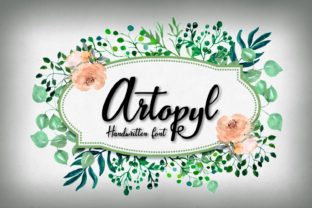
If you've ever struggled to make a greeting card feel warm, a brand identity feel approachable, or a social media graphic stand out with personality—Artopyl might be the quiet solution you’ve been overlooking. Artopyl is a hand-drawn script font designed with soft curves, gentle rhythm, and an unmistakably friendly presence. It’s not overly ornate or formal—instead, it balances playfulness with polish, making it ideal for creators who want authenticity without sacrificing professionalism.
Many adults—whether designers, small business owners, educators, or hobbyists—face recurring creative challenges: how to communicate warmth in digital spaces, how to differentiate their visuals in crowded feeds, or how to maintain consistency across materials without falling into generic templates. Artopyl doesn’t promise to fix every design problem—but it does offer a reliable, emotionally intelligent tool for human-centered communication.
Why Artopyl Fits Real-World Needs
Unlike many script fonts that lean heavily into elegance or extravagance, Artopyl feels intentionally accessible. Its lowercase letters flow naturally, with subtle variations in stroke weight and gentle entry/exit strokes that mimic real handwriting—without looking unpolished or hard to read. This makes it especially useful when clarity and charm must coexist: think event invitations, boutique packaging, classroom posters, or heartfelt email headers.
Consider these common situations—and how Artopyl helps:
- Small businesses launching a new product line: A handmade soap brand, for example, can use Artopyl on labels and Instagram carousels to reinforce values like care, craft, and connection—without needing custom illustration.
- Educators creating student-facing materials: Teachers often seek fonts that feel inviting—not childish, but kind. Artopyl adds visual friendliness to handouts, slide titles, or classroom signage while remaining legible at standard sizes.
- Content creators building cohesive brand aesthetics: When paired thoughtfully with a clean sans-serif (like Inter or Poppins), Artopyl becomes the “voice” in your typography system—adding tonal warmth where needed, then stepping back when seriousness is required.
Practical Applications You Can Start Today
You don’t need advanced design skills to benefit from Artopyl. Here are straightforward, high-impact ways to put it to work:
- Refresh your email signature: Replace generic bold text with a subtle Artopyl name and title. It takes under two minutes, costs nothing extra (if you already own the font), and signals attention to detail and personality.
- Design printable resources: Whether it’s a weekly planner, gratitude journal template, or recipe card set, Artopyl elevates downloadable PDFs from functional to delightful—increasing perceived value and shareability.
- Enhance social media storytelling: Use Artopyl for short quotes overlaid on lifestyle photos (e.g., “slow mornings,” “made with love”). Its rhythm supports breathability and emotional resonance—key for stopping scrollers.
- Create branded merch mockups: Even if you’re not printing yet, using Artopyl in digital mockups (tote bags, mugs, notebooks) helps visualize your brand voice before investing in production.
Importantly, Artopyl performs well across platforms. It’s optimized for both screen and print use, with consistent spacing and OpenType features (like ligatures and alternate characters) that add nuance without complexity. No need to adjust kerning manually for most applications—its built-in metrics support readability at 16px and above.
How Different Users Can Approach Artopyl Thoughtfully
Not every user needs the same level of customization—and that’s by design. Here’s how three common audiences can apply Artopyl meaningfully:
- Beginners: Start with pre-made Canva templates or Google Slides themes that include Artopyl—or simply install it as your system font and use it in Word or Pages for personal projects. Focus on one use case first (e.g., birthday cards) to build confidence.
- Freelance designers: Integrate Artopyl into your brand guidelines as a “tone-shifting” accent font. Define clear usage rules (e.g., “Artopyl only for headlines and callouts; never for body copy”) so clients understand its strategic role—not just decorative flair.
- In-house marketing teams: Test Artopyl in A/B email subject lines or landing page banners. Because it conveys approachability, it often lifts engagement metrics for campaigns centered on community, wellness, or creativity—especially with audiences aged 30–55.
What to Keep in Mind Before You Use Artopyl
Like any tool, Artopyl shines brightest when matched to the right context. Here are practical considerations:
- Legibility matters most: While Artopyl is highly readable at medium-to-large sizes, avoid using it for long paragraphs, legal disclaimers, or accessibility-critical content (e.g., medical instructions). Reserve it for moments where tone and emotion lead.
- Pairing is key: Artopyl works best alongside neutral, well-spaced sans-serifs or soft serifs. Avoid pairing it with other scripts or overly decorative fonts—that dilutes its charm and creates visual noise.
- Licensing is simple—but verify: Artopyl is available under standard desktop and web licenses. If you're embedding it in a client website or SaaS platform, confirm the license covers your intended use. Most individual purchases include basic web use (up to a set number of pageviews).
- It’s not a trend-chaser: Artopyl avoids fleeting stylistic gimmicks. Its strength lies in timelessness—not novelty. That means it won’t feel dated in two years, and it supports long-term brand evolution.
Ultimately, Artopyl succeeds because it meets people where they are: seeking tools that simplify decisions, deepen connection, and reflect intention—not just aesthetics. It doesn’t ask you to become a typographer. It asks only that you choose warmth over cold efficiency, authenticity over forced perfection, and humanity over uniformity.
So whether you're designing your first logo, refreshing a nonprofit’s newsletter, or adding joy to a child’s learning worksheet—download Artopyl and start small. Let its lovely feel guide your next creative choice—not as decoration, but as quiet, confident communication.