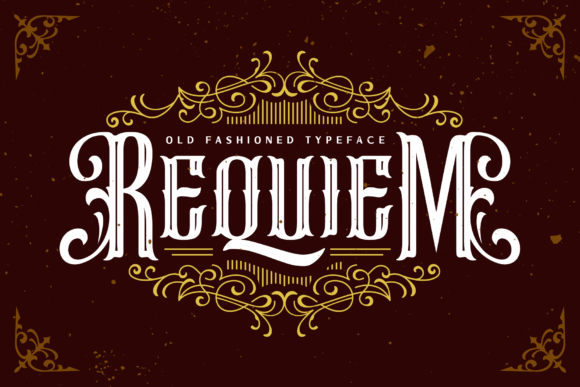
Requiem: Where Bold Blackletter Meets Modern Typography
Typography is more than just choosing a font—it’s about voice, intention, and impact. Among the many typefaces that bridge tradition and innovation, Requiem stands out as a compelling example of thoughtful reinvention. At first glance, Requiem appears rooted in history—its sharp angles, dense strokes, and dramatic contrast evoke the solemn grandeur of medieval blackletter scripts. Yet this isn’t a mere revival. Requiem is an experimental blackletter font with a bold feel, carefully crafted to function powerfully in today’s digital and print environments.
What Is Requiem—and Why Does It Matter?
Requiem was designed by Jonathan Hoefler, co-founder of Hoefler & Co., and released in 1995. Unlike traditional blackletter fonts—which often prioritize historical accuracy over legibility—Requiem reimagines the genre with structural clarity, generous spacing, and deliberate simplification. Its name evokes solemnity and reflection, but its execution is anything but archaic. Rather than replicating Gothic calligraphy stroke-for-stroke, Requiem interprets blackletter’s essence through a contemporary lens: strong, confident, and highly readable—even at smaller sizes.
This distinction is crucial. Many assume blackletter fonts are only suitable for certificates, religious texts, or heavy metal album covers. While those uses remain valid, Requiem challenges that narrow perception. Its bold feel doesn’t come from exaggerated weight alone; it emerges from intelligent design choices—like open counters, balanced rhythm, and subtle optical adjustments—that give it presence without sacrificing function.
The “Bold Feel”: More Than Just Thickness
When we say Requiem has a bold feel, we’re not referring solely to its visual weight (though its Regular and Bold weights are indeed substantial). Instead, “bold” here reflects typographic confidence: the assurance that comes from clear hierarchy, intentional contrast, and expressive structure.
- Contrast with purpose: Requiem features high stroke contrast—not just for drama, but to guide the eye and reinforce letterform recognition.
- Open apertures: Letters like a, e, and s have generously opened terminals, improving readability in body text and UI contexts.
- Vertical stress and upright posture: Unlike cursive blackletters that lean or swirl, Requiem stands tall and centered—making it ideal for headlines, branding, and editorial design where authority matters.
This boldness translates directly into real-world utility. A magazine using Requiem for section headers gains instant gravitas. A university publishing a commemorative volume finds resonance in its dignified tone. Even a modern tech startup might deploy Requiem sparingly—for a mission statement or keynote slide—to signal depth, legacy, and intentionality.
Requiem in Practice: Beyond Aesthetic Nostalgia
One common misconception is that experimental fonts like Requiem exist only for decorative effect. In truth, Requiem’s value lies in its functional versatility. It performs well across media—from high-resolution print to responsive web layouts—thanks to meticulous hinting and scalable outlines.
Consider these practical applications:
- Editorial Design: The New York Times Magazine used Requiem in a 2018 feature on typographic heritage, pairing it with neutral sans-serifs to create visual tension that underscored the article’s theme: tradition meeting progress.
- Brand Identity: A boutique law firm adopted Requiem for its letterhead and website hero text—not to appear old-fashioned, but to communicate integrity, precedent, and enduring values.
- Educational Materials: Art history departments use Requiem in syllabi and exhibition labels to subtly reinforce thematic connections between medieval manuscript culture and modern design thinking.
Crucially, Requiem avoids the pitfalls of less-refined blackletter fonts: no unintended “noise,” no confusing ligatures, no compromised legibility in lowercase settings. That balance—between expressive character and everyday usability—is what makes it both timeless and timely.
How Requiem Fits Into Today’s Creative Ecosystem
In an age dominated by minimalist sans-serifs and variable fonts, Requiem offers something rare: intentional texture. Designers increasingly seek typefaces that carry narrative weight—not just neutrality. Requiem delivers that weight without sacrificing clarity or accessibility.
Its relevance extends beyond graphic design. In education, Requiem serves as a teaching tool for typography students learning how historical forms evolve under new constraints—like screen rendering or multilingual typesetting. In UX writing, it demonstrates how even display fonts can support readability when paired thoughtfully (e.g., Requiem headings over Inter or Source Serif Pro body copy).
And in business? Requiem helps brands stand apart—not through novelty for its own sake, but through authenticity. When a craft distillery names its flagship bourbon “Requiem Reserve,” the font choice becomes part of the story: reverence for time-honored methods, executed with modern precision.
Dispelling Myths About Blackletter and Experimental Fonts
Before embracing Requiem—or any expressive typeface—it helps to clarify some persistent assumptions:
- Myth: “Blackletter fonts are inaccessible or outdated.”
Truth: Requiem proves that historical inspiration can yield highly functional, inclusive typography—especially when designed with contemporary reading habits and accessibility standards in mind. - Myth: “Experimental means impractical.”
Truth: Requiem’s experimentation lies in its reinterpretation—not rejection—of blackletter principles. Every curve and serif serves a structural or semantic role. - Myth: “Bold fonts always dominate a layout.”
Truth: Requiem’s bold feel is contextual. Used sparingly—as a single headline, a pull quote, or a chapter opener—it commands attention without overwhelming. Its strength is in restraint, not volume.
Getting Started With Requiem: Tips for Beginners and Pros Alike
Whether you're a student exploring type for the first time or a seasoned designer expanding your toolkit, here’s how to make the most of Requiem:
- Start small: Try it in a single-line headline before committing to full-body usage. Notice how its vertical emphasis creates natural hierarchy.
- Pair wisely: Requiem harmonizes beautifully with humanist serifs (e.g., Source Serif Pro) and clean, geometric sans-serifs (e.g., Inter). Avoid overly ornate companions that compete for attention.
- Respect its rhythm: Requiem thrives with generous line spacing and careful tracking. Don’t crowd it—let its structure breathe.
- Test across devices: Preview Requiem in your CMS or design tool at multiple sizes. You’ll quickly see why its optimized outlines shine on retina displays and mobile screens alike.
Most importantly: use Requiem to mean something. Its power comes not from decoration, but from alignment—between message and medium, past and present, form and function.
A Typeface That Speaks With Substance
Requiem reminds us that typography is never neutral. Every font carries cultural memory, technical nuance, and expressive potential. As an experimental blackletter font with a bold feel, Requiem doesn’t shout—it resonates. It bridges centuries without compromise, honoring tradition while insisting on relevance.
In a world saturated with fleeting trends, Requiem endures because it was built not just to look striking, but to communicate with clarity and conviction. Whether you're crafting a thesis, launching a brand, or designing a poster for a community event, Requiem invites you to pause, reflect, and choose type that carries meaning—not just momentum.
So the next time you consider a font that says “this matters,” remember Requiem—not as a relic, but as a response. A response to noise with nuance, to speed with substance, and to sameness with singular voice.