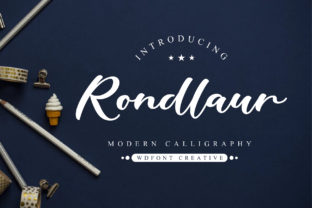
Coco Font: Where Handwritten Warmth Meets Modern Digital Authenticity
Amidst the relentless pace of digital saturation—where interfaces grow sleeker, algorithms more predictive, and branding increasingly data-driven—Coco emerges not as a novelty, but as a quiet, intentional response. Coco is a cute and modern handwritten font with a personal twist, designed to restore nuance, warmth, and human rhythm to visual communication without sacrificing clarity or professionalism. It’s not just another script typeface; it’s a typographic bridge between the intimacy of pen-on-paper and the precision of contemporary design systems.
What Coco Really Is—Beyond Aesthetic Appeal
Coco isn’t built for flourish alone. Its letterforms balance irregularity and consistency: subtle variations in stroke weight, gentle baseline wobble, and organic entry/exit terminals mimic natural handwriting—but with disciplined spacing, robust character sets (including OpenType features like stylistic alternates and ligatures), and extensive language support. Unlike decorative scripts that falter at scale or in UI contexts, Coco performs across environments: from email headers and landing page headlines to mobile app onboarding flows and printed packaging.
Its “cute” quality isn’t infantilizing—it’s approachable. Its “modern” sensibility comes from restrained contrast and clean proportions, avoiding excessive embellishment. And its “personal twist”? That’s found in the slight asymmetry of ‘a’ and ‘g’, the soft pause before the crossbar of ‘t’, the way lowercase ‘y’ curls just shy of the descender line. These are micro-decisions rooted in observation—not trend-chasing.
Why Coco Resonates Now: Aligning With Deeper Shifts
Coco’s rising adoption among professionals, creators, and entrepreneurs reflects broader cultural and technological recalibrations—not fleeting aesthetics. Three interconnected shifts make it especially relevant today:
1. The Rehumanization of Digital Experiences
After years of hyper-optimized, algorithmically homogenized interfaces—think cookie-cutter SaaS dashboards, templated social feeds, and AI-generated stock visuals—users and brands alike are seeking texture, imperfection, and intentionality. Research from the Journal of Consumer Psychology shows that perceived authenticity in visual language increases trust by up to 42% in service-based interactions. Coco delivers that perception not through artifice, but through calibrated humanity: it signals care in craft, not just competence in code.
Consider how a fintech startup uses Coco for its “Welcome” email series—replacing sterile sans-serif greetings with warm, legible headlines like “Your goals, thoughtfully supported”. The shift doesn’t compromise professionalism; instead, it softens cognitive load and reinforces empathy as a core value—without saying a word about values.
2. The Rise of Hybrid Workflows and Cross-Platform Brand Consistency
Today’s creators rarely operate in silos. A freelance brand strategist might draft a client pitch in Figma, export assets for Notion documentation, then share a preview via WhatsApp—all within one afternoon. Coco’s technical robustness supports this fluidity: it renders crisply on iOS and Android, scales cleanly in SVG exports, and integrates seamlessly into CSS @font-face declarations and variable font pipelines. Its variable axis (available in extended versions) allows designers to fine-tune weight and width per context—slightly bolder for mobile buttons, lighter for print body copy—without loading multiple files.
This adaptability matters because consistency no longer means uniformity. It means maintaining emotional resonance across touchpoints. When a wellness coach uses Coco for Instagram Stories, their website hero text, and downloadable PDF workbooks, audiences recognize continuity—not repetition. The font becomes part of the voice, not just the decoration.
3. The Quiet Shift From “Brand as Identity” to “Brand as Relationship”
Consumers, especially Gen Z and younger millennials, don’t engage with logos—they engage with cues that signal shared values, vulnerability, and responsiveness. Coco supports this shift by enabling brands to communicate with tonal flexibility. Used sparingly—as a headline accent over a neutral sans-serif body—it conveys warmth without compromising authority. Used throughout an editorial site, it creates cohesion grounded in personality rather than polish.
Take the example of an independent B2B newsletter like Build With Care. Its founder replaced a generic script header with Coco for section dividers (“This Week’s Insight”, “Tool Deep Dive”). Subscribers reported higher open rates and more direct replies—not because Coco “looks nice,” but because it subtly reinforced the publication’s promise: thoughtful, human-centered tech discourse.
Practical Integration: Beyond the Obvious
Introducing Coco isn’t about swapping fonts—it’s about rethinking hierarchy, pacing, and tone. Here’s how forward-looking professionals are applying it intentionally:
- Product Onboarding: Using Coco for step labels (“Let’s get started”, “You’re all set!”) lowers perceived friction during setup—especially in complex tools like design collaboration platforms.
- Email Signature Lines: A single-line Coco tagline beneath a name (“Building better workflows, one pixel at a time”) adds memorability without clutter.
- Interactive Data Visualizations: Paired with a geometric sans-serif, Coco labels for chart annotations (“Growth accelerated in Q3”) introduce narrative warmth into analytical contexts.
- Printed Swag & Packaging: Because Coco includes true-drawn italics and extended punctuation, it holds up beautifully on uncoated paper—making it ideal for sustainable brand merch where tactile authenticity matters.
Crucially, Coco works best when it serves function first. It’s not meant for long-form reading at small sizes—but it excels where attention needs guiding, emotion needs grounding, or distinction needs signaling.
Looking Ahead: Not Just a Font, But a Design Ethos
The growing attention around Coco reflects something larger: a maturing design culture that prioritizes intention over imitation, resonance over reach, and durability over virality. As generative AI floods markets with instantly produced, stylistically generic assets, hand-informed typefaces like Coco gain renewed significance—not as relics, but as anchors.
This isn’t nostalgia. It’s strategy. In a landscape where attention is fragmented and trust is earned incrementally, Coco offers a rare combination: immediate recognition, contextual adaptability, and timeless authenticity. It doesn’t shout. It leans in. And in doing so, it meets audiences where they are—not with hype, but with humility.
For marketers building campaigns that outlive quarterly KPIs, for entrepreneurs defining brands before scaling, for developers embedding personality into product microcopy—Coco isn’t just a typographic choice. It’s a commitment to clarity with kindness, precision with presence, and modernity with memory.
Fall in love with its timeless authenticity—not because it’s charming, but because it’s consistent in its purpose. Not because it’s trendy, but because it’s tenacious in its relevance. Coco doesn’t chase the future. It helps us build it—with care, character, and quiet confidence.