Maqin Larisa: Where Sporty Energy Meets Timeless Typography
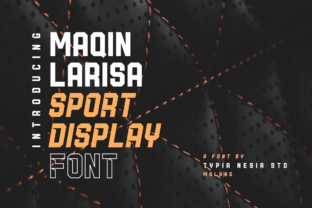
Typography isn’t just about legibility—it’s about resonance. In a digital landscape saturated with fleeting design trends, Maqin Larisa stands apart not by shouting, but by moving with quiet confidence. It’s a sporty and modern sans serif font with incredible charm—designed for clarity, built for rhythm, and refined for longevity. Whether you’re launching a fitness app, rebranding a boutique studio, or crafting a keynote deck for educators, Maqin Larisa offers something increasingly rare: typographic presence that feels both energetic and grounded.
More Than Just a Font—A Response to How We Communicate Today
Our attention spans are shorter, our screens more varied, and our expectations higher—not just for speed, but for coherence. Users don’t just read text; they scan, absorb, and decide in seconds. That’s why fonts like Maqin Larisa matter now more than ever. Its open apertures, balanced x-height, and subtly dynamic stroke contrast improve readability across devices—from smartwatches to large-format presentations—without sacrificing personality.
Unlike ultra-thin or overly geometric sans serifs that can feel sterile or detached, Maqin Larisa carries warmth in its curves and intention in its angles. The “sporty” quality isn’t literal—it’s in the forward-leaning energy of its italics, the taut precision of its letterforms, and the way its weight progression (from Light to Bold) supports hierarchy without visual strain. Designers aren’t choosing it to follow a trend—they’re choosing it because it works where people actually engage: in emails, social feeds, dashboards, and printed workshop materials.
Why Now? A Shift Toward Intentional, Human-Centered Type
In recent years, we’ve seen a quiet but meaningful pivot away from generic system fonts and overused web staples. Tools like variable fonts, improved CSS support, and faster loading times have made thoughtful typography more accessible—not just for agencies, but for solo bloggers, small business owners, and nonprofit teams. At the same time, audiences have grown more attuned to subtle cues: a slightly too-rigid font can undermine trust in a wellness brand; a sluggish, low-contrast typeface may dilute urgency in a time-sensitive campaign.
Maqin Larisa arrives at this inflection point—not as a novelty, but as a practical answer. Its design acknowledges real-world constraints: it renders crisply on Windows and macOS alike, scales cleanly in responsive layouts, and maintains character even at 14px in body copy. And because it avoids extreme stylistic flourishes, it pairs effortlessly with photography, data visualizations, and hand-drawn illustrations—making it a reliable anchor in mixed-media storytelling.
Real-World Use Cases That Reveal Its Strength
- A yoga studio’s website: Using Maqin Larisa Light for class descriptions and Bold for instructor names creates breathing room and emphasis—mirroring the balance their practice promotes.
- An edtech platform: Its consistent spacing and clear numerals improve scannability in progress dashboards and course outlines, reducing cognitive load for learners juggling multiple tabs and responsibilities.
- A sustainable apparel brand: Paired with natural textures and muted tones, Maqin Larisa’s understated confidence reinforces authenticity—no need for exaggerated caps or forced “eco-friendly” styling.
- A freelance designer’s portfolio: Its versatility across headings, captions, and case study text means fewer font swaps, tighter file sizes, and stronger visual continuity—critical when clients scroll quickly on mobile.
How Maqin Larisa Fits Into Evolving Creative Workflows
Creative professionals no longer treat typography as an afterthought. With tools like Figma’s variable font support, Adobe Fonts’ one-click sync, and CMS integrations that simplify webfont loading, selecting and deploying a purpose-built typeface like Maqin Larisa has become part of the first design decision—not the last. That shift reflects broader changes: tighter deadlines, cross-functional collaboration, and the expectation that visual language aligns seamlessly with voice, values, and user journey.
For marketers, this means headlines in Maqin Larisa Bold land with impact in email subject lines—and retain legibility in preview panes. For educators building digital lesson plans, its generous counters and friendly lowercase ‘a’ and ‘g’ reduce reading fatigue during long screen sessions. Even developers appreciate its well-hinted outlines and OpenType features (like tabular numerals and discretionary ligatures), which add polish without requiring deep technical customization.
Not Just for “Designers”—Why Everyday Creators Benefit
You don’t need a design degree to recognize when type feels right. Think about the difference between scanning a newsletter that uses cramped, low-contrast type versus one where each paragraph breathes, each heading guides, and every call-to-action stands out naturally. That’s the functional benefit of Maqin Larisa: it removes friction so your message—not the medium—takes center stage.
Small business owners updating their Canva templates, bloggers refining their Substack headers, or community organizers designing event flyers all face the same challenge: communicate clearly, build trust quickly, and reflect their ethos without overcomplicating things. Maqin Larisa delivers that balance. Its sporty spirit shows up in active verbs (“Join,” “Start,” “Build”) without leaning into cliché; its modernity keeps it relevant whether you’re designing for Instagram Reels or printed workshop handouts.
Practical Tips for Getting Started
- Start with hierarchy, not decoration: Use Maqin Larisa Regular for body text, SemiBold for subheads, and Bold only for primary headlines or key CTAs. Let weight—not size or color—do the work.
- Respect line length and spacing: At 16px, aim for 60–75 characters per line. Pair with generous line height (1.5–1.6) to honor its open, airy proportions.
- Test across contexts: Preview how it looks in dark mode, on a tablet held horizontally, and embedded in a PDF report. Its consistency across environments is one of its quiet strengths.
- Pair thoughtfully—not excessively: It works beautifully with neutral serif companions (like EB Garamond or Literata) for contrast in long-form content, or stands confidently alone in minimalist interfaces.
Timeless Appeal, Not Timeless Stasis
“Timeless” doesn’t mean static. Maqin Larisa’s charm lies in its ability to adapt without losing identity—much like the professionals who use it. A graphic designer launching a new brand in 2024 will find the same reliability in Maqin Larisa that an educator preparing hybrid learning materials in 2027 will rely on. That durability comes from disciplined design choices: measured contrast, humanist proportions, and optical sizing that ensures legibility at every scale.
It also reflects a broader cultural shift: we’re valuing tools that age well, not those that chase virality. In a world of AI-generated visuals and algorithm-driven feeds, intentional typography becomes a quiet act of care—for readers, for users, and for the integrity of the message itself.
Final Thought: Typography as Quiet Confidence
Maqin Larisa doesn’t demand attention—it earns it. Its sporty energy moves with purpose. Its modern structure feels current without being trendy. Its charm isn’t performative; it emerges in the way words flow, the ease with which meaning lands, and the subtle sense of cohesion it brings to diverse projects. For professionals balancing creativity and clarity, for creators building something meaningful, and for anyone who believes communication should be both effective and humane—Maqin Larisa is more than a font. It’s a thoughtful collaborator in the work that matters.