Heulwen: The Handwritten Font That Makes Your Words Feel Human
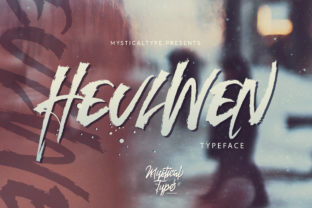
If you’ve ever stared at a clean, sterile design and thought, “This needs soul,” you’re not overthinking it — you’re noticing what’s missing. Heulwen is that missing piece: a classic, bold handwritten font with distinctive character shapes, subtle irregularities, and confident strokes. It doesn’t try to mimic calligraphy apps or digital brushes. Instead, Heulwen feels like ink pressed onto paper by someone who knows exactly what they want to say — and isn’t afraid to say it with personality.
When “Just Another Font” Isn’t Enough
Most people reach for Heulwen not because they need *a* font, but because they need *the right voice*. Not every project calls for polished minimalism. Sometimes your audience needs to feel seen — not just informed. That’s where Heulwen steps in: as the quiet confidence behind a small-batch candle label, the warmth in a teacher’s printable classroom poster, or the authenticity in a freelance photographer’s portfolio intro line.
It works especially well when tone matters more than neutrality — like when you’re launching a new workshop series, designing a wedding invitation suite, or building a brand around craft, care, or community. Heulwen doesn’t shout. But it holds space — and people notice.
A blogger writing about slow living
She drafts her posts in plain text, then uses Heulwen for pull quotes and section headers. Why? Because readers scrolling on mobile don’t pause for long paragraphs — but they *do* stop for a phrase set in Heulwen. It signals: “This part matters. This part is human.” She doesn’t use it for body text (it’s not built for long reading), but for those intentional moments where emotion needs to land.
A small bakery owner updating their menu board
Instead of swapping out vinyl lettering every season, she prints seasonal specials on kraft paper using Heulwen — then tapes them beside the counter. Customers tell her it “feels like the chef wrote it themselves.” That perception builds trust faster than any discount sign. She pairs it with a simple sans-serif for prices and ingredients, letting Heulwen do the emotional work.
An educator preparing back-to-school materials
Her students are 8–10 years old. She avoids overly decorative fonts in worksheets — but uses Heulwen for encouragement notes (“You’ve got this!”) and learning goal banners. Kids recognize it as “friendly handwriting,” not “teacher font.” It lowers the barrier between instruction and engagement. One parent even emailed to ask where she got the font — saying her child asked to “write like the posters.”
A freelance illustrator branding their own site
They use Heulwen only in their logo lockup and hero headline. No animation, no effects — just black-on-white, large and centered. It tells visitors instantly: this isn’t corporate stock art. This is hand-made, considered, and personal. Clients who book through that site consistently mention “the vibe” in their first message — proof that typography sets expectations before a single word is spoken.
Where Heulwen Fits — and Where It Doesn’t
Heulwen shines brightest in short-form, high-intent contexts: logos, social media graphics, packaging accents, presentation titles, greeting cards, signage, email headers, and printed ephemera. It’s not designed for dense reports, legal disclaimers, or multilingual websites with complex scripts — and trying to force it there creates friction, not flair.
Before downloading or licensing Heulwen, ask yourself:
- Is this for display — not reading? If you need people to absorb information quickly or scan long sections, choose a legible, open-typeface instead.
- Does it match how your audience already experiences your brand? A law firm adding Heulwen to a formal letterhead might unintentionally undermine credibility — unless they’re deliberately rebranding toward approachability (and have tested that shift).
- Are you pairing it thoughtfully? Heulwen pairs best with neutral, grounded typefaces — think Montserrat, Lato, or even Georgia. Avoid other decorative or script fonts nearby; they compete instead of complement.
Practical Tips for Getting It Right
Start small. Try Heulwen in one place first — a newsletter subject line, a product tagline, or the title on your next Instagram carousel. See how it changes the mood. Notice whether people linger longer, comment more, or describe your work differently.
Pay attention to weight and spacing. Heulwen’s boldness means it can dominate fast — especially on screen. Use generous letter-spacing (tracking) in all-caps settings, and avoid cramming too many words into one line. On mobile, test at actual size: what reads beautifully on desktop may blur or crowd on smaller screens.
Consider licensing carefully. Some versions include extended language support or OpenType features like stylistic alternates — useful if you’re designing for international audiences or want subtle variation in repeated characters (like multiple “a”s or “e”s). Free versions often lack these, and may not be licensed for commercial use — always check the terms before printing 500 postcards or embedding in an app.
Why It Sticks With People
Fonts shape perception before comprehension kicks in. Heulwen triggers associations — handmade, trustworthy, unhurried, expressive — without needing explanation. That’s powerful when you’re competing for attention in crowded feeds or cluttered storefronts.
But its real strength isn’t in being “unique.” It’s in being recognizable — not as a trend, but as a consistent voice across touchpoints. When a customer sees Heulwen on your website banner, then again on your receipt stamp or thank-you card, something clicks: “This is them. This is real.”
That consistency builds familiarity. Familiarity builds comfort. And comfort — in a world of algorithm-driven sameness — is rare, valuable, and quietly persuasive.
Not Just for Designers
You don’t need Adobe Creative Cloud or years of typography training to use Heulwen well. Canva supports it. Google Docs lets you upload and use it via extensions. Even PowerPoint handles it cleanly — just remember to embed fonts before sharing slides externally.
What matters most is intention. Heulwen won’t fix weak messaging or unclear strategy. But if you already know what you want to say — and who you’re saying it to — Heulwen helps you say it like yourself.
So before your next project, ask: Does this need polish — or presence? Clarity — or connection? Efficiency — or empathy? If the answer leans toward the latter, Heulwen might be the quiet collaborator you’ve been overlooking.