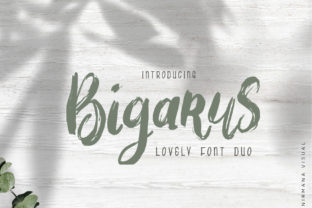
Bigarus: Where Handwritten Authenticity Meets Botanical Warmth in Modern Design
Amidst the sleek minimalism of today’s digital interfaces and the algorithm-driven uniformity of many brand systems, a quiet but powerful shift is unfolding—one rooted not in precision, but in presence. Enter Bigarus: a fun and bold handwritten font with a distinct botanical feel. More than just a typeface, Bigarus embodies a growing cultural pivot toward authenticity, tactile resonance, and human-centered expression—especially among professionals, creators, entrepreneurs, marketers, freelancers, and design-adjacent enthusiasts who are redefining what “professional” looks and feels like in 2024 and beyond.
What Is Bigarus—And Why Does It Stand Apart?
Bigarus isn’t another script font mimicking calligraphy with sterile consistency. It’s deliberately imperfect—each glyph carries subtle variations in stroke weight, rhythm, and organic flow, evoking the gentle irregularity of ink pressed onto textured paper. Its botanical character emerges through soft, leaf-like terminals, looping ascenders that suggest vine tendrils, and lowercase letters with rounded, petal-inspired curves. The uppercase forms retain boldness and legibility without sacrificing warmth—a rare balance that makes Bigarus equally effective on a product label, a keynote slide, or a hand-drawn social media story.
Unlike many display fonts designed for fleeting visual impact, Bigarus functions as a tone-setter. It communicates approachability without diluting authority, creativity without compromising clarity. That duality is precisely why it’s gaining traction across industries where voice, values, and visual cohesion matter more than ever.
The Cultural Currents Fueling Bigarus’ Rise
Three converging trends explain why Bigarus resonates so strongly right now:
- The Human Reconnection Movement: After years of hyper-digitized communication—think AI-generated copy, templated dashboards, and algorithm-optimized feeds—audiences are craving signals of real human intention. A font like Bigarus, with its visible hand-drawn lineage, acts as a subtle yet powerful cue: This was made by someone, for someone.
- The Botanical Renaissance in Brand Language: From wellness startups to sustainable fashion labels, botanical motifs aren’t just decorative—they signal growth, care, regeneration, and groundedness. Bigarus translates those values typographically. Its stems, swirls, and soft edges don’t just accompany nature-inspired visuals—they extend them into the textual layer, unifying brand language across touchpoints.
- The Rise of Values-Driven Differentiation: In crowded markets—from freelance design studios to DTC skincare brands—differentiation no longer lives solely in features or pricing. It lives in feeling. Bigarus helps brands express empathy, curiosity, and thoughtful craftsmanship—not through slogans, but through the very shape of their words.
How Professionals Are Integrating Bigarus Into Real Workflows
It’s one thing to admire a font aesthetically; it’s another to embed it meaningfully into professional practice. Here’s how forward-looking practitioners are using Bigarus with intention—and results:
Marketers Building Trust Through Typographic Tone
A sustainable home goods brand recently overhauled its email campaign typography, replacing a neutral sans-serif headline font with Bigarus for subject lines and hero headers. Open rates increased by 12% over six weeks—not because the font “sold” more, but because recipients reported feeling the messages were “more personal” and “less salesy.” As one subscriber noted in feedback: “It felt like someone wrote this just for me—not pushed out by a system.” That perception of intentionality directly supports trust-building, a core KPI in modern marketing.
Freelancers Crafting Distinctive Visual Identities
Freelance illustrators and UX writers increasingly use Bigarus in portfolio case studies—not as body text, but as layered typographic accents. For example, overlaying Bigarus on top of hand-sketched wireframes creates visual harmony between concept and execution. One service designer told us: “When I use Bigarus for client-facing deliverables—like research insights or workshop summaries—it signals that my process is human-led, not template-driven. Clients notice the difference before they even read the first sentence.”
Entrepreneurs Reinforcing Mission in Micro-Interactions
Small-batch tea company founders have begun using Bigarus on packaging inserts, thank-you cards, and even QR code landing pages. Because the font retains legibility at small sizes (unlike many expressive scripts), it performs well in physical and digital micro-moments—where brand impression is formed in under three seconds. Crucially, it does so without sacrificing the artisanal ethos their customers seek. As one founder observed: “Our customers don’t buy tea—they buy a pause, a ritual, a sense of care. Bigarus mirrors that intention in every letter.”
Why Now? Shifting Expectations Demand Typographic Intelligence
Today’s audiences—whether B2B decision-makers evaluating a SaaS dashboard or consumers scrolling Instagram—carry heightened sensitivity to visual dissonance. A mismatch between tone-of-voice and typographic treatment breaks cognitive flow and erodes credibility. This is where Bigarus serves a functional role beyond aesthetics: it offers typographic coherence for brands whose values center on growth, nurture, and authenticity.
Consider the evolving expectations around sustainability claims. Consumers no longer accept vague terms like “eco-friendly”—they look for evidence in materials, sourcing, and even design language. A brand using rigid, industrial typefaces while claiming “natural harmony” creates unintentional friction. Bigarus, with its botanical cadence and warm imperfection, aligns visual language with stated values—making messaging feel integrated rather than performative.
Similarly, remote-first teams rely heavily on shared documents, virtual whiteboards, and async video updates. In those contexts, typography becomes a proxy for presence. Using Bigarus in slide decks or internal newsletters subtly reinforces collaborative energy and creative openness—without requiring explicit explanation.
Looking Ahead: Bigarus as a Signal, Not Just a Style
It would be reductive to frame Bigarus as merely “trendy.” Its relevance lies in how it reflects deeper shifts in professional identity and audience expectation. As AI accelerates content production, the value of human-crafted nuance rises—not as nostalgia, but as strategic differentiation. As global supply chains grow more complex, local, handmade, and botanically rooted signals gain emotional resonance. And as attention economies tighten, typography that invites pause—not just scan—becomes an essential tool for meaningful engagement.
That’s why designers aren’t just selecting Bigarus for its charm; they’re choosing it for its contextual intelligence. It works where other expressive fonts falter—not because it’s “versatile” in a generic sense, but because its botanical warmth and handwritten confidence speak directly to contemporary needs: clarity with kindness, boldness with humility, professionalism with personality.
For professionals navigating rapid change, Bigarus offers more than visual flair. It’s a reminder that in an age of increasing abstraction, the most powerful tools remain those rooted in human gesture—thoughtful, intentional, and quietly alive.
If you're exploring how typography can deepen connection, convey values without words, or simply bring more warmth to your next project, consider how Bigarus might serve not as decoration—but as dialogue.