Ole Blizzard: A Bold Handwritten Font
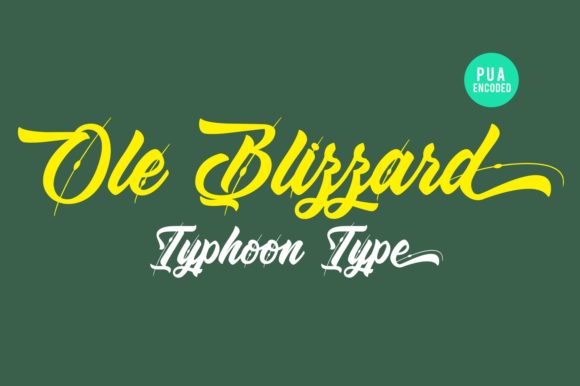
Ole Blizzard isn’t just another script font—it’s a confident, expressive handwriting style with weight, rhythm, and unmistakable personality. Designed to feel human-made yet purposefully bold, it bridges the gap between casual authenticity and visual impact. Its thick strokes, subtle irregularities, and generous spacing give it presence without sacrificing readability—making it ideal for projects where you want warmth *and* authority.
Why Ole Blizzard Stands Out
Most handwritten fonts lean either too delicate or too chaotic. Ole Blizzard avoids both traps. Its bold baseline anchors each letter, while its natural variation in stroke width and slight slant adds organic energy. Unlike overly ornate scripts, it doesn’t require perfect kerning to work well—and unlike rigid display fonts, it invites interpretation. It’s not “perfectly imperfect.” It’s *intentionally alive*.
This balance makes Ole Blizzard unusually versatile. You can scale it large for posters or reduce it thoughtfully for short headlines in digital ads—without losing legibility or character. It also pairs cleanly with neutral sans-serifs (like Inter, Lato, or Montserrat) for contrast that feels intentional, not accidental.
Creative Uses Across Real Projects
Designers and marketers often reach for Ole Blizzard when they need to signal approachability without softening their message. Here’s how it works in practice:
- Branding for small businesses: A local bakery named “Hearth & Crumb” used Ole Blizzard for its logo and chalkboard-style menu boards. The font reinforced craft, care, and handmade quality—while still feeling substantial enough to stand out on delivery bags and Instagram posts.
- Educational materials: An online course on creative journaling applied Ole Blizzard to section headers and exercise prompts. Learners reported feeling more invited to participate—not because the font was “cute,” but because it felt like a friendly, capable guide rather than an impersonal instructor.
- Event promotion: A community music festival chose Ole Blizzard for its lineup poster headline (“Summer Echoes 2024”). Paired with a clean mono-spaced type for artist names and dates, it created hierarchy and mood in one glance—energetic but not frantic, personal but not private.
Adapting Ole Blizzard for Your Audience and Platform
How you use Ole Blizzard depends less on rules and more on intention. Ask yourself: *What feeling do I want this text to carry—and what action should it support?*
For social media graphics, use Ole Blizzard sparingly—only for primary headlines or short calls to action. Its strength lies in contrast, not density. On Instagram, a post with Ole Blizzard over a muted photo and minimal body text performs better than one trying to cram multiple lines of the font into a carousel slide.
In email newsletters, reserve it for subject lines or hero banners—not paragraph text. Its boldness draws attention quickly in crowded inboxes, but readers still need clarity and scannability. One freelance educator increased open rates by 22% after switching from a decorative serif to Ole Blizzard for her weekly “Tip of the Week” subject line—keeping the rest of the email in a highly readable sans-serif.
Print applications benefit most from Ole Blizzard’s texture. Letterpress business cards, screen-printed tote bags, or foil-stamped book covers let its physicality shine. Just remember: if your printer requires vector outlines, convert the font early and check spacing—especially around punctuation. Small details like the tail of the “y” or the curve of the “g” gain emphasis at larger sizes, so test at final output scale.
Keeping It Clear, Consistent, and Original
Using Ole Blizzard doesn’t mean defaulting to “handwritten = playful.” That assumption limits its range. Instead, treat it as a tone-setting tool—like choosing a voice actor for a brand video. A tech startup explaining AI ethics used Ole Blizzard for its manifesto headline (“Clarity Before Code”) and paired it with tight, technical body copy. The contrast signaled humility and transparency—not informality.
To maintain consistency across touchpoints, define simple usage guidelines upfront:
- Use only for headlines, logos, or short quotes—not long paragraphs.
- Stick to one weight (Ole Blizzard is typically offered as a single-weight family).
- Limit color variation: black, dark charcoal, or deep navy work best; avoid light grays or pastels unless intentionally softening contrast for accessibility reasons.
- Always pair with a highly legible, low-contrast sans-serif for supporting text.
Originality comes not from over-designing the font itself, but from how thoughtfully you place it. Try setting Ole Blizzard in all caps for impact—but only if the word count stays under three words. Or invert its usual role: use it for a short footer signature (“Made with care in Portland”) beneath a minimalist product page. These small shifts keep the font fresh and audience-appropriate.
Ideas to Try This Week
You don’t need a big project to explore Ole Blizzard’s potential. Start small:
- Create a printable habit tracker with Ole Blizzard headers (“Move Well,” “Rest Deeply,” “Write Honestly”)—then fill in daily entries by hand or with a simple sans-serif.
- Redesign one slide from an upcoming presentation using Ole Blizzard for the core idea only—the rest in a neutral type. Notice how much faster your audience lands on the point.
- Sketch three versions of your personal logo or brand mark using Ole Blizzard as the anchor text. Don’t refine—just explore spacing, size ratio, and placement relative to icons or shapes.
Ole Blizzard rewards restraint. Its power isn’t in filling space—it’s in claiming attention with honesty and weight. When you choose it, you’re not selecting a trend. You’re choosing clarity with character, confidence with warmth, and design that feels made—not assembled.