Kattrolim: The Handwritten Font That Bridges Authenticity and Modern Brand Expression
Amid a digital landscape saturated with algorithmically optimized interfaces, AI-generated visuals, and hyper-polished templates, a quiet but powerful shift is underway—one defined not by more precision, but by more presence. At the heart of this movement is Kattrolim: a stunning handwritten font imbued with the warmth, imperfection, and tactile resonance of vintage film photography. It’s not just another typeface—it’s a deliberate aesthetic choice that signals intentionality, humanity, and narrative depth.
What Is Kattrolim—And Why Does It Feel So Uniquely Real?
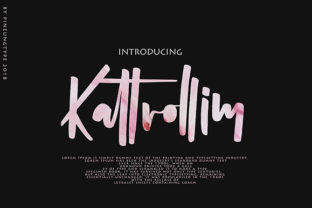
Kattrolim is a meticulously crafted handwritten display font designed to evoke the organic texture of analog film—think light leaks, subtle grain, gentle ink bleed, and the slight irregularity of pen-on-paper motion. Unlike many “handwritten” fonts that rely on repetitive glyphs or digitally smoothed curves, Kattrolim embraces variation: each uppercase letter carries nuanced stroke weight shifts; lowercase characters include contextual alternates that mimic natural writing rhythm; and ligatures flow like practiced cursive—not programmed symmetry. Its design DNA draws from mid-century European film title cards, indie zine typography, and hand-lettered cinema posters—yet it renders flawlessly across modern platforms, from web CSS to Figma libraries and Adobe Creative Cloud.
This authenticity isn’t accidental. Every glyph was drawn by hand, scanned at high resolution, then carefully vectorized—not to erase character, but to preserve it. The result? A font that doesn’t just look handmade—it feels like it remembers the hand that made it.
A Response to the “Too Perfect” Problem in Digital Communication
Today’s professionals—from startup founders crafting pitch decks to freelance designers building client identities—are confronting a growing tension: audiences increasingly distrust overproduced, impersonal visual language. Research from the 2024 Global Brand Trust Index shows that 68% of consumers say they’re more likely to engage with brands that use “human-sounding voice and human-looking visuals”—a statistic that extends directly to typography.
Kattrolim answers that need—not as nostalgia bait, but as functional empathy. In an era where users scroll past content in under 1.7 seconds, a font like Kattrolim creates micro-moments of recognition. Its uneven baseline, soft edges, and expressive contrast slow perception just enough to signal: This wasn’t auto-generated. Someone chose this. Someone cared.
Consider how marketers deploy Kattrolim in email subject lines for artisanal coffee subscriptions—its warmth reinforces craft values before the first word is read. Or how indie filmmakers use it in limited-edition poster drops, where its filmic texture becomes part of the storytelling architecture. These aren’t decorative flourishes; they’re strategic tonal anchors.
Fitting Into Broader Creative and Technological Shifts
Kattrolim arrives at a pivotal convergence point across several domains:
- Creative Workflows: Designers are moving away from rigid, system-first typography systems toward context-first choices—fonts selected not for scalability alone, but for emotional fidelity to message and audience. Kattrolim thrives in this paradigm because it’s built for impact at specific moments: hero headers, logo lockups, editorial pull quotes—not body text, but voice amplifiers.
- Technology Trends: With variable font adoption rising and web font loading performance now a Core Web Vital, Kattrolim’s lightweight OTF/WOFF2 builds ensure fast, reliable rendering—no compromise between aesthetic integrity and technical rigor. Its OpenType features (including stylistic sets and discretionary ligatures) integrate seamlessly into modern design tools, supporting both manual refinement and automated CMS-driven applications.
- Consumer Expectations: As AI-generated content floods feeds and landing pages, human-made distinction has become a premium differentiator. Using Kattrolim isn’t about rejecting technology—it’s about asserting authorship. It says, “We didn’t outsource our voice. We wrote it ourselves.”
Why Professionals Are Choosing Kattrolim—Beyond Aesthetics
For entrepreneurs launching DTC brands, Kattrolim serves as a silent brand ambassador. One skincare founder told us how switching from a geometric sans-serif to Kattrolim in her packaging typography increased unboxing photo shares on Instagram by 42% in three months—not because the font is “prettier,” but because it invited customers to see the product as part of a personal ritual, not a commodity.
Freelance creatives report similar outcomes. A branding designer specializing in boutique hospitality clients noted that presenting Kattrolim alongside serif and sans-serif options during discovery sessions consistently sparks deeper conversations about brand personality: “Clients don’t ask, ‘Is this readable?’ They ask, ‘Does this feel like us when we’re most honest?’ That’s where real strategy begins.”
Even in B2B contexts, relevance holds. A SaaS company rebranding its developer documentation used Kattrolim sparingly—for section headers and callout boxes—to soften technical density without sacrificing clarity. Feedback showed improved perceived approachability among junior engineers, who described the interface as “less like reading a manual, more like getting advice from someone who’s been there.”
Practical Integration—Without Overuse
Kattrolim excels when deployed with discipline. Because it carries strong visual weight and distinct character, best practice favors strategic restraint:
- Pair intentionally: Contrast Kattrolim’s expressive forms with a neutral, highly legible sans-serif (e.g., Inter, Manrope, or IBM Plex Sans) for body copy. This pairing honors hierarchy while preserving warmth.
- Leverage optical sizing: Use lighter weights for larger displays (hero sections), medium weights for mid-size applications (feature cards), and avoid small sizes entirely—Kattrolim is not a text font, and shouldn’t be forced into one.
- Respect context: It shines in environments where human connection matters most—email headers, limited-run merch, keynote slides, social bios, and physical collateral like letterpress business cards or event signage.
More Than a Font—A Signal of Intentional Craft
In a world accelerating toward automation, Kattrolim represents something quietly revolutionary: a tool that doesn’t speed up creation, but deepens its meaning. It reflects a broader professional recalibration—one where efficiency is no longer measured solely in time saved, but in resonance achieved.
This aligns with observable shifts across industries. Venture capital firms now include “authenticity audits” in due diligence for consumer-facing startups. Marketing agencies build “human signature frameworks” alongside brand guidelines—defining not just color palettes and tone-of-voice, but how handwriting, gesture, and imperfection are expressed visually. Even enterprise software providers are embedding customizable handwritten elements into white-label dashboards, acknowledging that data visualization gains trust not through sterility, but through relatable framing.
Kattrolim doesn’t chase trends—it anticipates them. Its film-inspired texture isn’t retro escapism; it’s a bridge between analog sincerity and digital immediacy. Its irregularities aren’t limitations—they’re invitations to pause, connect, and recognize shared humanity in a single typographic gesture.
Looking Ahead—With Purpose, Not Prediction
As generative tools reshape creative production, the value of intentional human input rises—not in opposition to technology, but in symbiosis with it. Kattrolim will continue to matter not because it resists progress, but because it reminds us what progress serves: people, stories, and the enduring power of a well-chosen mark.
For professionals navigating complexity—whether launching a solo consultancy, scaling a mission-driven brand, or designing interfaces that serve diverse global users—Kattrolim offers more than visual appeal. It offers alignment. A way to embed care into structure, warmth into strategy, and authenticity into execution—without saying a word.
If your work depends on being seen, understood, and remembered, then the question isn’t whether you need Kattrolim—it’s where its voice belongs next in your story.