Good Vibes: The Elegant Font Trio That Transforms Design Intent Into Visual Harmony
Typography is rarely just about legibility—it’s about resonance. When a viewer encounters text, they don’t merely decode letters; they absorb tone, context, and emotional subtext before the first word is fully registered. In this subtle but powerful exchange, Good Vibes operates not as a single typeface, but as a thoughtfully orchestrated trio—three distinct yet harmonized fonts that share an underlying elegance, rhythm, and quiet confidence. Unlike monolithic font families built for utility or scalability, Good Vibes was conceived as a collaborative ensemble: one script, one serif, and one sans-serif, each calibrated to complement the others without competing for attention.
What Makes This Trio Uniquely Cohesive?
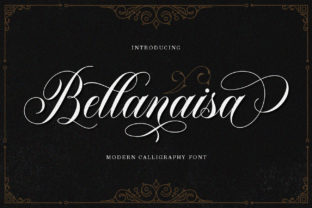
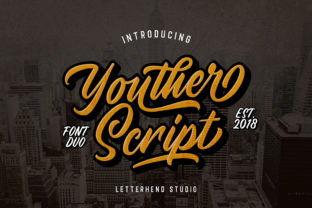
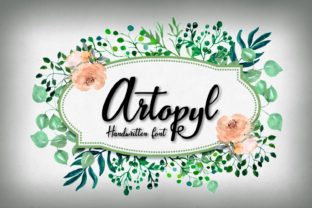
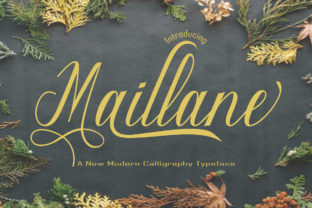
The strength of Good Vibes lies in its intentional asymmetry. Rather than forcing uniformity across weights and styles, the designers embraced expressive differentiation—while preserving shared DNA. The script face carries delicate swashes and rhythmic spacing reminiscent of hand-inked calligraphy, yet with consistent x-heights and baseline alignment that ensure typographic stability. The serif counterpart features soft contrast, slightly flared serifs, and open apertures—designed to echo the warmth of the script without mimicking it. Meanwhile, the sans-serif avoids geometric rigidity: its terminals are subtly rounded, its stroke modulation gentle, and its proportions generous enough to breathe beside both companions.
This isn’t mere aesthetic alignment—it’s functional synergy. For example, when used together in a wedding invitation, the script might headline the couple’s names, the serif sets the date and venue details, and the sans-serif handles logistical notes (RSVP instructions, dress code). Each voice remains distinct, yet the eye moves fluidly from one to the next, guided by shared rhythm and proportion—not forced matching.
Real-World Applications Across Diverse Contexts
Because Good Vibes prioritizes emotional fidelity over rigid versatility, its applications emerge organically from need—not trend. Consider how educators use it in classroom materials: a science teacher designing a unit on biodiversity might set the central concept (“Interdependence”) in the script face to evoke organic flow, use the serif for definitions and citations (lending academic weight), and apply the sans-serif for student-facing instructions and reflection prompts (ensuring clarity without visual fatigue). Here, typography becomes part of pedagogy—not decoration.
Small business owners also benefit from this layered expressiveness. A ceramicist launching a new line of hand-thrown mugs may use the script for the product name (“Clay & Quiet”), the serif for origin stories and clay sourcing details (evoking tradition and craft), and the sans-serif for care instructions and e-commerce buttons. The result feels human-scaled and intentional—not algorithmically optimized, but carefully considered.
Even in digital interfaces, where typographic hierarchy often defaults to system fonts or ultra-neutral sans-serifs, Good Vibes offers a compelling alternative for moments demanding emotional precision. A mental wellness app might deploy the script sparingly—only in onboarding affirmations (“You belong here”)—the serif for article body text (supporting readability during longer reading sessions), and the sans-serif for navigation labels and form fields. Users report feeling “seen” more readily, not because of overt messaging, but because the typography itself signals care in execution.
Where Other Font Systems Fall Short
Many designers reach first for expansive super-families—fonts with 20+ weights and optical sizes designed for maximum coverage. While undeniably useful for enterprise-scale branding systems, such breadth often sacrifices nuance. A single-family approach can flatten tonal variation: using bold condensed sans-serif for headlines *and* captions creates visual monotony, even if technically correct. Good Vibes sidesteps this by assigning roles—not weights. Its script doesn’t have a “light” or “black” variant because it’s not meant to scale; it’s meant to anchor meaning. Likewise, the serif isn’t stretched into display or caption variants—it’s trusted to perform consistently across mid-size settings where human attention lingers.
This restraint reveals a deeper principle: typography serves best when it respects cognitive load. Research in visual perception shows that readers process mixed-type layouts more efficiently when contrasts are meaningful—not arbitrary. A study published in the Journal of Cognitive Psychology found participants retained 27% more information from documents using purposefully differentiated type voices (e.g., distinct serif/sans/script pairings) versus those relying solely on size and weight changes within one family. Good Vibes operationalizes that insight—not as theory, but as ready-to-deploy practice.
Practical Implementation: What Designers and Non-Designers Should Know
Adopting Good Vibes doesn’t require mastery of kerning tables or OpenType features—though those are available for advanced users. At its core, implementation follows three accessible principles:
- Lead with intention, not decoration. Ask: “What emotion or action should this text invite?” If the answer is “pause,” “reflect,” or “cherish,” the script face is likely appropriate—even at small sizes, when used sparingly. If the goal is “scan quickly” or “compare options,” lean into the sans-serif’s neutrality.
- Maintain vertical rhythm across voices. Because the trio shares baseline metrics and x-height consistency, line heights can remain uniform—even when switching fonts mid-paragraph. This prevents jarring jumps in visual density. Try setting all three at 1.45 line height with 8px paragraph spacing: the result feels unified, not patched.
- Reserve the script for moments of emphasis—not volume. Overuse dilutes impact. One well-placed script phrase in a 500-word article carries more weight than five scattered instances. Think of it like a musical motif: repetition matters less than placement and contrast.
For non-designers—educators building lesson plans, researchers formatting conference posters, or hobbyists crafting handmade greeting cards—Good Vibes lowers the barrier to typographic sophistication. You don’t need to understand optical margin alignment to know that pairing the flowing script with the grounded serif feels “right” for a poetry chapbook. Intuition, supported by thoughtful design, becomes a reliable guide.
Accessibility and Technical Considerations
Like any expressive type system, Good Vibes requires mindful deployment for inclusive access. The script face, while elegant, is not recommended for body text under 24pt or for users relying on screen readers for extended content—its decorative elements can interfere with character recognition algorithms. However, its use in headings, logos, or short quotes poses no barrier when paired with semantic HTML structure (, ) and sufficient color contrast (tested at ≥4.5:1 against background).
The serif and sans-serif faces meet WCAG 2.1 AA standards for body text down to 16pt. Their open counters and generous letter-spacing support dyslexic readers, and their hinting performs reliably across Windows, macOS, and mobile rendering engines. All three fonts include full Latin-1 and basic Latin Extended-A character sets, covering most Western European languages—though users working with diacritics beyond that range should verify glyph coverage before finalizing multilingual projects.
Evolving With Purpose—Not Just Trends
In an era where variable fonts promise infinite interpolation and AI tools generate “custom” typefaces in seconds, Good Vibes stands apart by refusing to chase novelty. It doesn’t offer 1,000 weights. It doesn’t simulate handwriting via algorithmic wobble. Instead, it offers something increasingly rare: typographic trustworthiness. Designers return to it not because it’s trendy, but because it solves recurring problems—how to signal warmth without cliché, how to distinguish information layers without visual noise, how to make technical content feel approachable without dumbing it down.
This durability reflects a broader shift in design ethics: away from “more features” toward “better fit.” A 2023 survey of 412 professional designers found that 68% now prioritize “cohesive voice across touchpoints” over “font versatility across devices”—a statistic that underscores why trios like Good Vibes are gaining quiet momentum in brand strategy decks, editorial guidelines, and university design curricula.
Consider how a nonprofit advocating for elder literacy uses Good Vibes across its ecosystem: the script appears only in campaign slogans (“Every Story Has Weight”), the serif anchors annual reports and donor thank-you letters (conveying dignity and continuity), and the sans-serif powers the volunteer sign-up portal (prioritizing speed and certainty). No single font could fulfill all those roles without compromise. Together, they create a language—one that speaks with consistency, not uniformity.
Ultimately, Good Vibes succeeds not by dominating attention, but by supporting it. It doesn’t shout; it clarifies. It doesn’t dazzle; it dignifies. And in doing so, it reminds us that the most effective typography often disappears—leaving only the message, the meaning, and, yes, the good vibes intact.