Calefornia Script
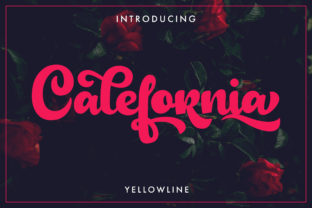
Calefornia Script is a bold, expressive handwritten font with unmistakable personality—loose yet intentional, playful but never careless. It’s not just another decorative typeface; it’s a deliberate design choice that signals warmth, authenticity, and creative confidence. Unlike rigid sans-serifs or overly formal serifs, Calefornia Script invites attention without demanding it. Its uneven baseline, subtle ink variation, and confident stroke weight make it ideal for moments where human voice matters more than mechanical precision.
Where Calefornia Script Fits in Your Workflow
Fonts aren’t used in isolation—they’re embedded in process. Calefornia Script enters most workflows at the point where tone becomes as important as content: when you’re shifting from internal planning to external expression. That could be finalizing a brand guideline, preparing a workshop handout, designing an Instagram story, or even drafting a pitch deck slide meant to land emotionally before logically.
It rarely belongs in early-stage wireframing or data-heavy reports—but it shines during execution and delivery phases. Think of it as the “voice layer” added after structure is sound. You wouldn’t sketch a business model canvas in Calefornia Script, but you might use it on the cover slide of your investor presentation to signal approachability and vision before diving into metrics.
Using It Before, During, and After Key Projects
Before: When defining visual identity or mood boards, Calefornia Script helps test emotional resonance. Drop it into mockups alongside palette swatches and photography styles to gauge whether “friendly authority” or “creative energy” reads clearly. Its presence early on acts as a consistency checkpoint—if it feels off against your imagery or values, that’s useful feedback before committing to broader asset development.
During: In collaborative design sprints or client reviews, using Calefornia Script for headlines or callouts keeps focus on intent rather than perfection. Because it looks hand-drawn, stakeholders often respond more openly to iterations—there’s less perceived pressure for “final polish.” Designers report smoother feedback loops when presenting social media banners or email headers set in Calefornia Script versus ultra-clean alternatives.
After: Once launched, Calefornia Script supports long-term brand recognition—not through repetition alone, but through consistent tonal alignment. A small business owner using it across packaging, thank-you cards, and event signage builds familiarity rooted in feeling, not just font choice. Over time, customers begin associating that energetic slant and rhythmic flow with reliability and care.
Compatibility and Practical Integration
Calefornia Script works best when paired with neutral, highly legible companions—think Inter, Manrope, or Source Sans Pro. These pairings create natural hierarchy: Calefornia Script handles voice and emphasis; supporting fonts handle clarity and volume. Avoid pairing it with other script fonts or overly ornate serifs—competition for attention dilutes impact.
On digital platforms, load performance matters. Calefornia Script is lightweight (under 40KB for WOFF2), so it renders quickly even on slower connections. For web use, define fallbacks thoughtfully: font-family: "Calefornia Script", cursive; ensures graceful degradation without breaking layout integrity.
In print, its generous x-height and open counters hold up well at sizes as small as 16pt—ideal for invitations or product labels where charm shouldn’t sacrifice readability. Just avoid tight tracking or all-caps usage; its strength lies in rhythm and variation, not uniformity.
Workflow Examples Across Roles
- Educators: Use Calefornia Script for weekly classroom newsletters or learning goal trackers. Students recognize it instantly, and its informality lowers barriers to engagement—especially helpful in remote or hybrid settings where tone can feel distant.
- Freelancers: Apply it selectively to proposal covers or testimonial highlights—not body copy, but strategic accents. Clients remember how a document *felt*, and Calefornia Script adds memorable warmth without undermining professionalism.
- Small Business Owners: Integrate it into seasonal promotions, limited-edition packaging, or local event posters. Its handmade quality subtly communicates effort and care—valuable differentiators in crowded markets.
- Bloggers & Content Creators: Deploy it in Pinterest pin titles, YouTube thumbnail text overlays, or downloadable checklist headers. Its boldness cuts through algorithm-driven feeds while reinforcing personal branding.
Efficiency, Consistency, and Quality Control
Adopting any new font requires discipline—not just aesthetic judgment, but operational awareness. Start by defining clear usage rules: where Calefornia Script appears (e.g., “only for primary headlines and quote pulls”), minimum size thresholds, and color contrast requirements (aim for at least 4.5:1 against background for accessibility). Document these in your style guide—even a simple Notion page or shared Google Doc prevents drift over time.
For teams, consider creating reusable Figma or Adobe XD components with preset Calefornia Script styles—headline variants, pull-quote treatments, button labels. This reduces decision fatigue and speeds up iteration. One marketing team cut revision cycles by 30% after standardizing Calefornia Script usage across campaign assets.
Long-term usability hinges on restraint. Overuse flattens distinction. Reserve it for moments that earn emphasis: a mission statement, a key value proposition, a signature closing line. Let it breathe—and let its uniqueness amplify meaning instead of blending into noise.
Real-World Observations Worth Keeping
Designers consistently note that Calefornia Script performs strongest when aligned with action-oriented language. Phrases like “Start Here,” “Join Us,” or “Your Turn” gain momentum when set in its confident strokes. Passive or abstract phrasing (“Exploring Possibilities”) tends to weaken under its energy—so match tone and typography intentionally.
It also reveals inconsistencies in surrounding design faster than neutral fonts do. If spacing feels awkward, colors clash, or imagery lacks cohesion, Calefornia Script will highlight those gaps—not because it’s flawed, but because its expressiveness demands harmony. Treat that as diagnostic insight, not a limitation.
Finally, remember that fonts don’t carry meaning alone—they borrow it from context. Calefornia Script gains credibility when backed by strong content, thoughtful layout, and consistent application. It won’t fix weak messaging, but it will elevate strong ideas with unmistakable presence.
Making It Yours
Integrating Calefornia Script isn’t about adding decoration—it’s about sharpening intention. Ask yourself: Where does my work need more humanity? Where do I want people to pause, connect, or remember? That’s where Calefornia Script earns its place.
Begin small: swap it into one recurring asset—a newsletter header, a workshop worksheet title, a social media highlight reel intro. Observe how it changes perception, engagement, or even your own sense of ownership over the material. Then scale deliberately—guided by results, not trends.
Its charm isn’t accidental. Every curve, tilt, and weight shift was designed to support clarity through character. Used with purpose, Calefornia Script doesn’t just stand out—it helps your work land, resonate, and endure.