Bubble Texture: A Modern Decorative Font
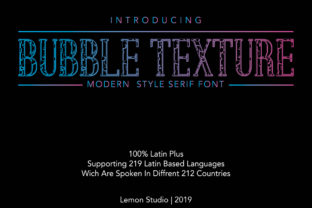
Bubble Texture is a friendly, contemporary decorative font designed to add charm and personality without sacrificing clarity. It’s not meant for long paragraphs or body text—but it shines where visual impact matters most: headlines, logos, social media graphics, greeting cards, and product packaging. Think of it as the handwritten note you’d leave on a friend’s desk—playful, warm, and unmistakably human.
What Makes Bubble Texture Stand Out?
At first glance, Bubble Texture feels soft and approachable. Its rounded letterforms mimic gentle, inflated shapes—like soap bubbles catching light—giving it subtle texture and dimension. Unlike many decorative fonts that lean heavily into whimsy or nostalgia, Bubble Texture balances modern minimalism with tactile warmth. Letters have consistent spacing, clean curves, and just enough irregularity to feel hand-crafted—not robotic.
It includes standard Latin characters, numerals, and common punctuation, making it practical for everyday use. While it doesn’t offer stylistic alternates or extensive language support, its simplicity is part of its strength: it loads quickly, renders well across devices, and pairs effortlessly with clean sans-serif fonts like Inter, Lato, or Montserrat.
Where Bubble Texture Fits in Real Life
Whether you’re launching an Etsy shop, designing a workshop flyer, or updating your Instagram Stories, Bubble Texture helps your message land with feeling—not just information.
- Small business owners use it for café chalkboard menus, boutique signage, or limited-edition product labels—especially when aiming for “locally made,” “hand-poured,” or “small-batch” vibes.
- Educators and parents choose it for classroom posters, reading reward charts, or printable activity sheets where friendliness encourages engagement.
- Bloggers and content creators apply it sparingly in featured quote graphics, newsletter headers, or YouTube thumbnails—adding contrast without overwhelming the eye.
- Freelancers and designers keep it in their toolkit for client projects needing a touch of lighthearted sophistication—say, a wellness brand rebrand or a children’s book cover mockup.
It works especially well in pastel palettes, soft gradients, or over textured backgrounds—its gentle outlines hold up nicely without competing visually. Just avoid pairing it with other highly decorative fonts; one standout typeface is usually enough.
Why People Choose Bubble Texture (and When They Might Not)
Most users turn to Bubble Texture when they want to signal approachability, creativity, or care—without leaning into childish or overly cutesy territory. It communicates “I’ve put thought into this” while still feeling effortless.
That said, it’s not ideal for every situation. If your project demands high readability at small sizes—like legal disclaimers, app interface buttons, or dense infographics—Bubble Texture won’t serve you well. Similarly, if your brand voice is strictly corporate, technical, or luxury-focused (think finance reports or premium skincare), its softness may dilute your intended tone.
Also worth noting: Bubble Texture is a display font, not a web font with variable weights. You’ll typically get one style—regular—with no bold or italic variants built in. That means you’ll need to rely on layout, color, or spacing to create hierarchy instead of weight shifts.
Getting Started—Simple & Practical
You don’t need design experience to use Bubble Texture effectively. Start by downloading the font file (usually .ttf or .otf) from a trusted source. Install it on your computer, then open Canva, Adobe Express, Figma, or even PowerPoint—you’ll find it listed alongside your other fonts.
Try these beginner-friendly experiments:
- Create a digital greeting card using Bubble Texture for the headline (“You’re Amazing!”) and a simple sans-serif for the rest.
- Design a printable weekly planner header—use it only for the week number or day names, not full sentences.
- Add it to a Canva Instagram Story template, layering it over a soft photo background with 70% opacity for subtle depth.
Remember: less is more. One line in Bubble Texture often carries more presence than three lines in a standard font. If something feels cluttered or hard to read at a glance, scale back—not up.
Things to Keep in Mind Before You Use It
First, check licensing. Bubble Texture is often offered under personal-use licenses by default. If you plan to use it in a client project, logo, or merchandise for sale, verify whether commercial rights are included—or purchase an appropriate license. Many reputable font sites clearly label usage terms upfront.
Second, consider accessibility. While Bubble Texture is legible in large sizes, its low contrast and rounded terminals can make it harder for some readers—especially those with dyslexia or low vision—to parse quickly. Always pair it with accessible body text and never rely on it alone to convey critical information.
Third, test how it looks across devices. What reads beautifully on your desktop monitor might appear slightly blurred or cramped on mobile. Preview in real conditions before finalizing.
Finally, trust your instincts—not just trends. Bubble Texture has lasting appeal because it feels intentional, not trendy. If it aligns with your voice, your audience, and your goal, it’s likely the right choice—even if it’s not the most downloaded font this month.
A Font That Supports Your Intent
Bubble Texture isn’t about being flashy. It’s about reinforcing warmth, authenticity, and thoughtful design—quietly, confidently. Whether you're sketching ideas on paper or building a Shopify homepage, it offers a way to say, “This matters—and so do you.”
Used with care, it adds character without complication. It invites attention without demanding it. And in a world full of sharp edges and fast scrolling, that gentle, bubbly presence? It’s more valuable than it first appears.