Contener: Handwritten Charm with Bold Intent
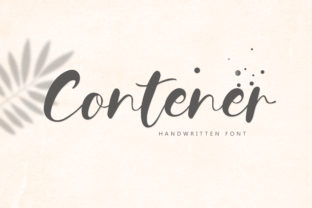
Contener isn’t just another script font you scroll past in a type library. It’s a handwritten font that feels human—like ink pressed with confidence—and carries a bold, grounded presence without sacrificing warmth. You’ll notice it right away: the slightly uneven baseline, the subtle variation in stroke weight, the intentional thickness that gives letters weight and personality—not sterility. It doesn’t try to mimic calligraphy or digital perfection. Instead, Contener lands somewhere between a confident signature and a carefully sketched headline—friendly but unmistakably deliberate.
Where Contener Fits Naturally (and Where It Doesn’t)
Fonts aren’t one-size-fits-all—and Contener shines brightest when its authenticity aligns with your message’s tone and audience’s expectations. Think of it as a design ally for moments where polish shouldn’t override personality.
Small Business Branding That Feels Human
If you run a local café, handmade ceramics studio, or independent wellness practice, Contener adds instant credibility through sincerity. A menu board set in Contener reads like it was designed by someone who knows your regulars’ names—not outsourced to a generic template. One bakery owner told us they switched their packaging labels from a sleek sans-serif to Contener—and saw more social media tags from customers who said, “It just *feels* like you.” That’s not accidental. The font quietly signals care, craft, and approachability—without shouting.
Editorial & Lifestyle Content With Warm Authority
Newsletter headers, blog section titles, or quote graphics for mindful living brands often suffer from either cold minimalism or overdone whimsy. Contener bridges that gap. Imagine a weekly mental health newsletter using Contener for its “This Week’s Reflection” header—it’s warm enough to invite reading, bold enough to hold attention amid busy inboxes. Similarly, lifestyle bloggers use it for Instagram story highlights (“Recipes,” “Routines,” “Real Talk”) because it conveys honesty without pretense.
Event Invitations That Set the Vibe
A wedding invitation in Contener says “thoughtful, personal, meaningful”—not “formal and distant.” It works especially well for rustic, garden, or intimate gatherings where guests expect warmth over grandeur. Same goes for milestone announcements (baby showers, anniversaries, creative launches): the font’s hand-drawn texture makes the moment feel uniquely curated, not mass-produced. Just avoid pairing it with ultra-thin fonts or ultra-modern layouts—it can visually compete rather than complement.
Who Benefits Most—and How They Use It Differently
Designers, founders, and content creators don’t all reach for Contener for the same reason—and that’s part of what makes it versatile.
- Freelance designers use Contener as a quick authenticity lever—especially when clients want “handmade” energy but lack time or budget for custom lettering. It’s a reliable shortcut that still feels intentional.
- Solopreneurs appreciate how easily it integrates into Canva or Adobe Express templates. No kerning tweaks needed for most headlines—just drop it in, adjust size, and the voice comes through.
- Educators and coaches choose Contener for downloadable worksheets or reflection journals. Its legibility at medium sizes (14–20pt) and friendly rhythm make text feel inviting—not intimidating—to learners.
Practical Considerations Before You Commit
Like any expressive font, Contener rewards thoughtful use—and stumbles when misapplied. Here’s what real users watch for:
Readability at Smaller Sizes
Below 12pt, some characters—especially lowercase a, e, and s—start to blur together. That’s fine for display use (logos, banners, posters), but avoid body text or dense captions. If you need a companion font for paragraphs, pair Contener with a clean, neutral sans-serif like Inter or Open Sans—not another script.
Spacing & Line Height Matter More
Because of its organic flow, tight tracking or cramped line height can make lines feel cluttered. Give it room: aim for 1.4–1.6 line height in digital use, and generous letter spacing in large-format prints. One print shop reported fewer reprints after reminding clients to add 5–10% extra tracking to Contener-based signage.
Brand Consistency Isn’t Automatic
Using Contener on your Instagram bio and nowhere else dilutes its impact. It works best when echoed in tactile ways—think hand-stamped tote bags, chalkboard specials, or foil-stamped business cards. The font invites multi-sensory reinforcement. If your brand lives mostly in spreadsheets or formal reports, Contener may feel out of place unless used very selectively (e.g., only in internal team newsletters).
What Sets Contener Apart From Other Handwritten Fonts
There are dozens of “handwritten” fonts online—but many fall into two traps: either overly decorative (hard to read, hard to scale), or too thin and fragile (loses impact at distance or on screen). Contener avoids both. Its bold twist isn’t about heaviness—it’s about presence. Letters have substance, yes, but also openness. The lowercase g and y have clear descenders; capitals stand tall without stiffness.
You’ll also notice it handles punctuation thoughtfully—the ampersand (&) has character, quotes feel natural, and even the hyphen looks intentional, not tacked on. That attention shows up in real projects: a florist using Contener for her “Seasonal Arrangements” label found customers paused longer to read it than with her previous font. Not because it’s flashy—but because it felt *meant* to be seen.
When to Pause and Consider Alternatives
Contener isn’t ideal for every context—and knowing when to step back is part of using it well.
- Highly technical or regulatory materials: Legal disclaimers, medical instructions, or compliance documents benefit from maximum neutrality and clarity. Contener’s expressiveness can unintentionally soften urgency or authority.
- Brands built on precision or futurism: A fintech dashboard, AI startup website, or engineering firm’s presentation deck may clash with Contener’s analog warmth—even if used sparingly.
- Multilingual support needs: While Contener covers Latin-based languages well (English, Spanish, French, Portuguese, German), it doesn’t include extended Cyrillic, Greek, or Asian language sets. Check your audience’s linguistic scope before licensing.
None of this makes Contener “limited”—it simply means it thrives when matched to purpose. The strongest uses we’ve seen share one thing: they treat the font not as decoration, but as a quiet extension of voice. Whether it’s a teacher writing encouragement on a student’s worksheet, a maker labeling a small-batch candle, or a nonprofit naming its community campaign—Contener helps the human behind the message come through, clearly and kindly.