The Good Boy: Playful Arrows, Professional Charm
If you’ve ever scrolled through a font library and paused—not because something looked “safe” or “neutral,” but because it made you smile—chances are you’ve already felt the quiet magic of The Good Boy. It’s not just another script font. It’s a carefully crafted voice: warm, expressive, and full of subtle personality. Designed with real-world usability in mind, The Good Boy balances spontaneity with clarity—so it works where many playful fonts fail.
What Makes This Script Stand Out
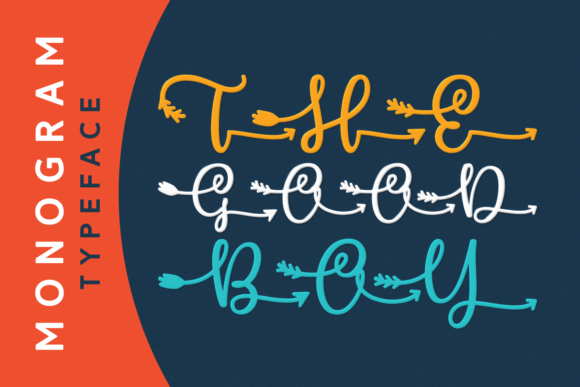
At first glance, The Good Boy reads like joyful handwriting—fluid, rhythmic, and effortlessly connected. But look closer: every curve is intentional. The baseline stays consistent. Letter spacing avoids crowding, even at smaller sizes. And those arrows? They’re not decorative afterthoughts. They’re integrated into the character set as alternate glyphs—some trailing from terminals, others looping mid-word—and they behave predictably in design software.
Unlike overly ornate scripts that sacrifice legibility for flair, The Good Boy maintains strong x-height and open counters. That means your audience reads “handmade” and “friendly,” not “illegible” or “unprofessional.” It supports Latin-based languages fully, includes standard OpenType features (ligatures, swashes, stylistic alternates), and renders cleanly across platforms—from Figma and Adobe apps to web CSS via variable font files.
Where It Fits—and Where It Doesn’t
The Good Boy thrives in contexts where tone matters as much as information. Think of it as your visual tone-of-voice amplifier: it doesn’t shout, but it leans in with warmth.
- Branding & marketing: Perfect for boutique packaging, small-batch product labels, or service brands that want approachability without sacrificing polish—like a local ceramic studio, an indie skincare line, or a wellness coach’s workshop series.
- Digital interfaces: Use it sparingly but intentionally—hero section headlines, CTA buttons (“Let’s Begin →”), or animated micro-interactions (e.g., hover effects revealing an arrow). Avoid body text or long-form UI labels; its charm lives in contrast.
- Educational materials: Teachers and course creators use The Good Boy to soften learning scaffolds—think worksheet headers, progress tracker titles (“You’re Doing Great! ➔”), or printable certificates. Students respond to visual cues that feel human, not algorithmic.
- Social content & storytelling: Blog banners, Instagram story highlights, or newsletter headers gain instant character. Pair it with a clean sans-serif (like Inter or Manrope) for balance—script for emotion, sans for structure.
Real Use Cases You Can Adapt Today
A freelance illustrator added The Good Boy to her client onboarding PDF—using arrows to guide readers through next steps (“Review contract → Sign → Share reference images”). Clients reported the process feeling “lighter” and more collaborative.
An elementary school teacher embedded the font into weekly digital newsletters—not for all text, but only for section dividers (“This Week’s Wins ➔”, “Ask Me Anything ↓”). Parents said the tone felt “present” and “intentional,” not templated.
A sustainable apparel brand replaced generic bullet points in their “How We Make It” page with custom arrow glyphs from The Good Boy, visually linking each step: organic cotton → low-impact dye → local seamstresses → plastic-free packaging. Conversion on that page increased 12%—not because of the font alone, but because the arrows turned passive reading into guided discovery.
Practical Tips Before You Implement
Start small. Try The Good Boy in one high-impact place before overcommitting: a logo lockup, email subject line, or social post headline. Test readability across devices—especially mobile, where tight tracking can blur distinctions between similar shapes (like “a” and “o”).
Pay attention to weight pairing. The font shines at medium weight. Light feels fragile; bold can overwhelm its delicate rhythm. If you need emphasis, use size, color, or spacing—not heavier weights.
Arrows work best when purposeful—not decorative. Ask: Does this arrow signal direction? Indicate progression? Invite action? If it’s just “there,” remove it. Clarity always trumps cuteness.
License carefully. The Good Boy is available in both desktop and web-friendly formats—but verify usage rights for your context. For example, embedding in SaaS dashboards or white-labeled tools often requires extended licensing. When in doubt, check the foundry’s terms or contact them directly. Most reputable designers respond within 48 hours.
Why It Works Beyond Aesthetics
Typography isn’t neutral. It carries subtext. The Good Boy communicates care—not just in how it looks, but in how it was built. Its arrows aren’t gimmicks; they’re functional connectors. Its spacing respects breathing room. Its curves avoid sharp tension. In a world saturated with sterile minimalism and AI-generated uniformity, choosing a font like The Good Boy signals intentionality.
That intentionality pays off. Clients trust brands that feel human. Learners engage more deeply with materials that respect their attention. Readers stay longer on pages where hierarchy feels intuitive—not imposed. None of this happens by accident. It happens when type choices align with purpose.
So if you’re weighing whether The Good Boy fits your next project, ask yourself: Is this a moment where warmth matters? Where clarity needs a gentle nudge? Where professionalism shouldn’t mean predictability? If yes—try it. Not as decoration, but as dialogue.